Do Women Have to Die to Become Famous?
3. Mai 2026
Anežka Ondračková
Editorial magazin53a
Anežka Ondračková examines institutional forms of female representation through the lens of the trend towards major posthumous retrospectives. She critically questions whether every review of such an exhibition ultimately degenerates into a portrait that repeats and reinforces the structural failings of centuries of cultural policy. In doing so, she demonstrates how this belated recognition perpetuates a perfidious cycle: Whilst male artists such as Baselitz vociferously claim the limelight during their lifetimes, women must first die to receive institutional attention. At the same time, every review of such retrospectives risks reproducing the curatorial narrative about the artist – as a belatedly discovered genius, as a tragically overlooked figure who is part of a belated correction of art history. Ondračková’s plea is directed against this form of posthumous heroization and in favor of institutions opening up so that they do not have to wait for the artist’s death to grant her visibility.
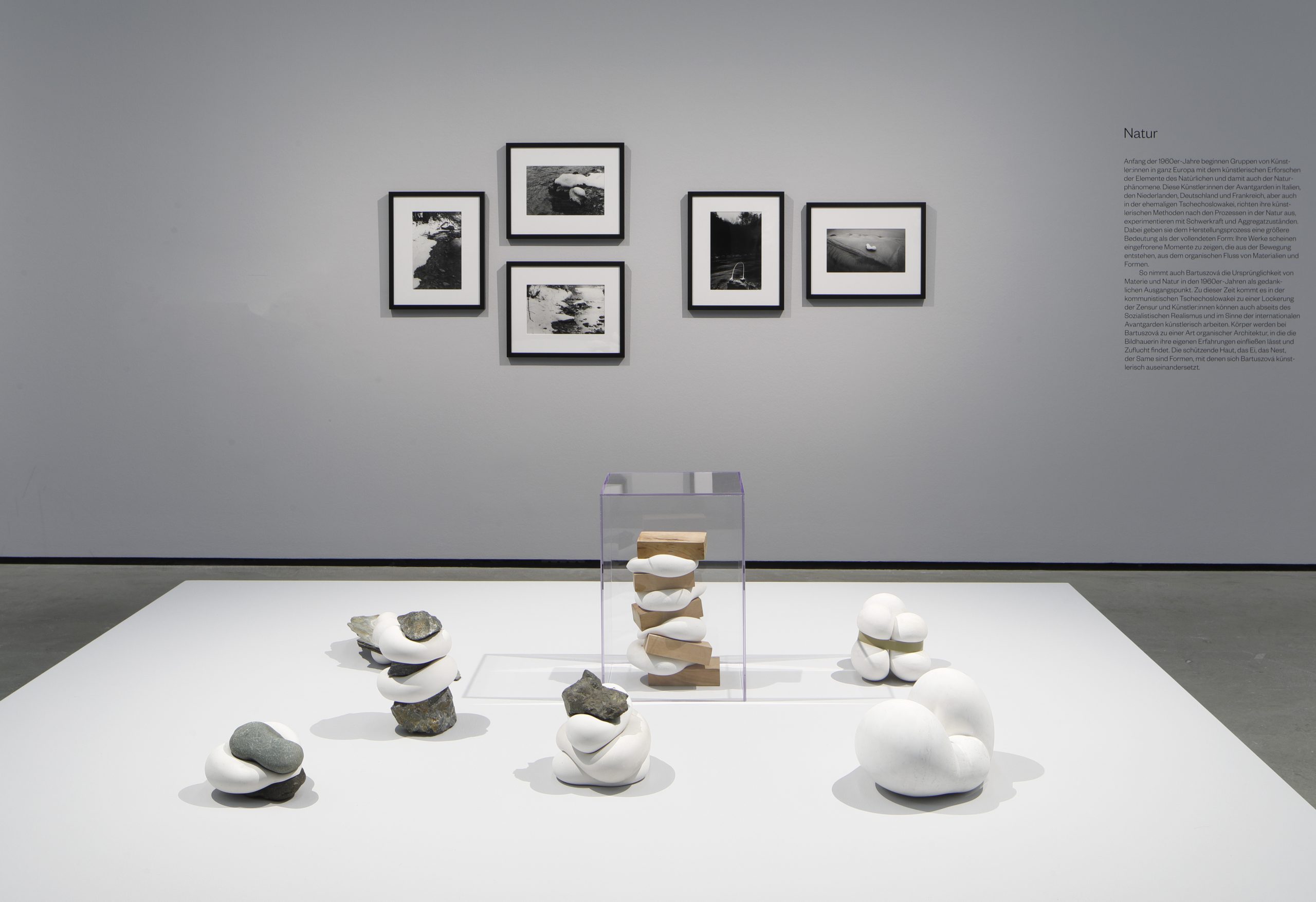
With the first major retrospective in Austria of the artist Charlotte Perriand coming up this May, we might stumble upon the fact that the title “first major retrospective exhibition of … (insert name of famous woman artist)” is not an isolated phenomenon but rather is becoming an almost normal event, that is, at least within the last decade or so. Charlotte Perriand, Eva Hesse, or Maria Bartuszová. These names are only a couple of those that many of the world’s leading contemporary galleries and museums, such as the Tate, the Guggenheim Museum, or the Museum der Moderne Salzburg have been showcasing in the frame of dead famous women artists.
There is a recurring theme of death associated with achieving institutional fame. However, this phenomenon can be distinguished only when examining the artist’s gender. Imagine Baselitz, who is known for the provocativeness within his painting, setting his own direction of painting by turning it upside down. What we know of him is the loudness with which he set the stage for himself in the art world. So, if Baselitz himself could set the stage for himself within the institutional art world, why won’t we do the same for the women artists, instead of waiting only after they can no longer speak for themselves? Do women have to die to become truly famous? And how are their lives and art read in these retrospectives? Is belated attention better than none at all? And perhaps most crucially: do these retrospective exhibitions inevitably become a form of posthumous portraiture – constructing images of these women artists that say as much about our contemporary moment and institutional blind spots as they do about the artists themselves? How do we avoid turning critical engagement with overdue recognition into another form of portraiture that perpetuates the very structures it claims to address?
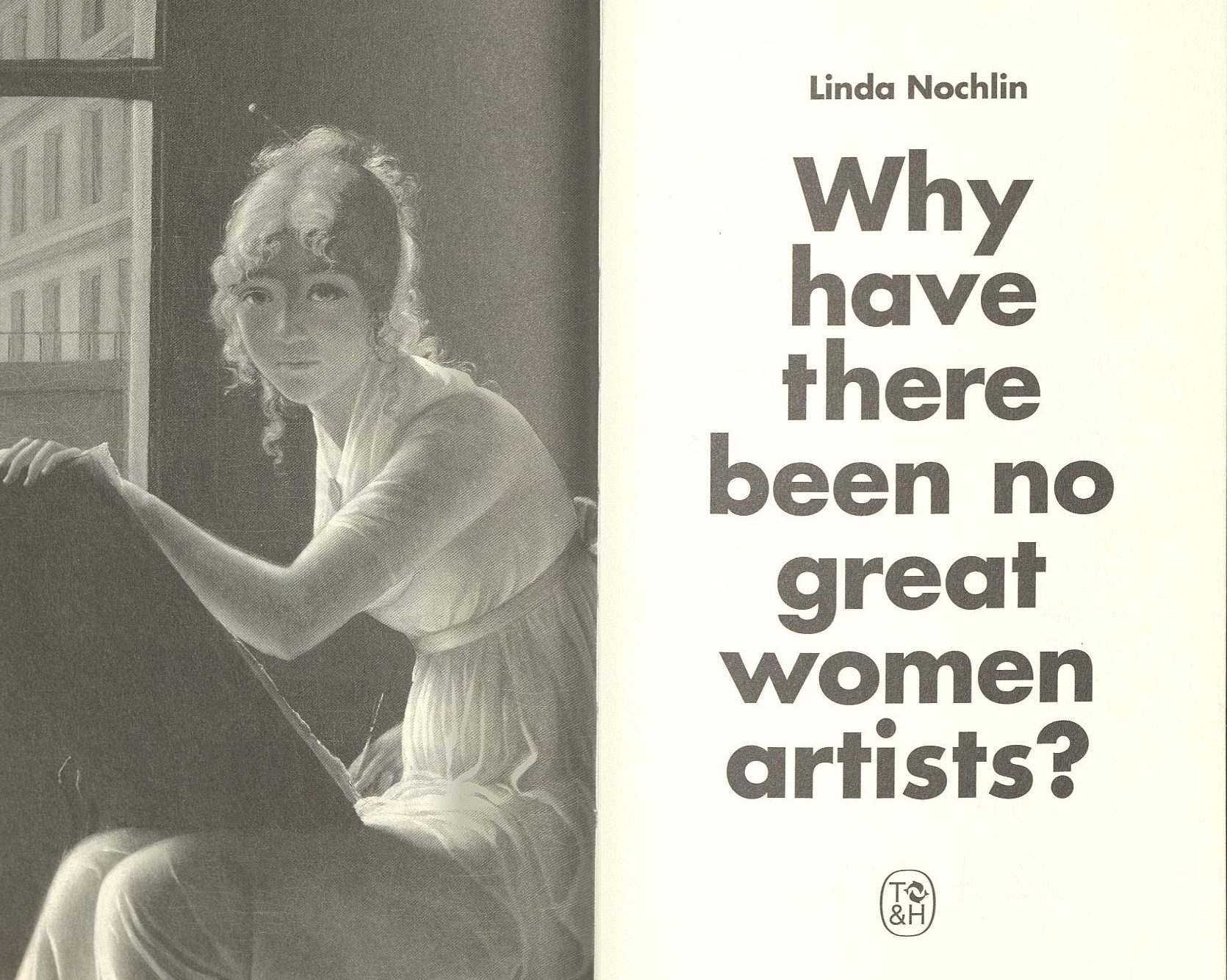
Already by the early 70s, Linda Nochlin posed a very similar question, making it the title of her book Why have there been no great women artists? She implies that the lack of so-called “great women artists” might not be due to the lack of talent or genius in women artists but rather to be found in the structures of patriarchy, its processes, and the conditions of possibility [1]. How could you possibly manage to break through when women back then couldn’t even attend an art school, when women were seen only as objects that male artists could observe and depict? Women who were tied to housework, raising kids, and other things. But today, even though women’s rights are facing political backlash not only in dictatorial regimes, women’s position has radically changed. In many parts of the world, women can acquire the same education as men. Women are no longer obliged to be the sole caretakers for their kids. Women are given way more possibilities than ever before. So, why do we still celebrate women artists mainly after their death?
We have established that the possibilities as well as conditions within society have, since Linda Nochlin’s book, quite changed. It would only be natural to then ask what thing has not gone through any major change. Is it the arts’ institutional framework, or even the canon, or the type of art history we are inclined to write? Surely, we are very slow in adopting everything new, but how long really does it take to catch up to the contemporary world?
The art institutions are just trying to set the art history record straight. As if they were trying to catch up with the contemporary world that never stopped running. Hopefully that is not the case, because then it would be obvious that we will probably never see a major exhibition of women artists in their productive years. Because if they are still alive, they are already too forward. Their stories are too complex, too influenced by the art world and its institutions; they know what they want and how they want it. They stand in front of their artwork and define it. The wait for death is not as much as a delay in the history of women artists that we didn’t have the space to celebrate. Rather, the wait seems intentional, calculated. Once the artist dies, the story gains a clear beginning and an end. A person with a complicated character, who is always learning and figuring things out, then becomes one snapshot of narrative. The artists and their work become fixed, narrativized into numerous decades, where each depicts a different approach towards creating.
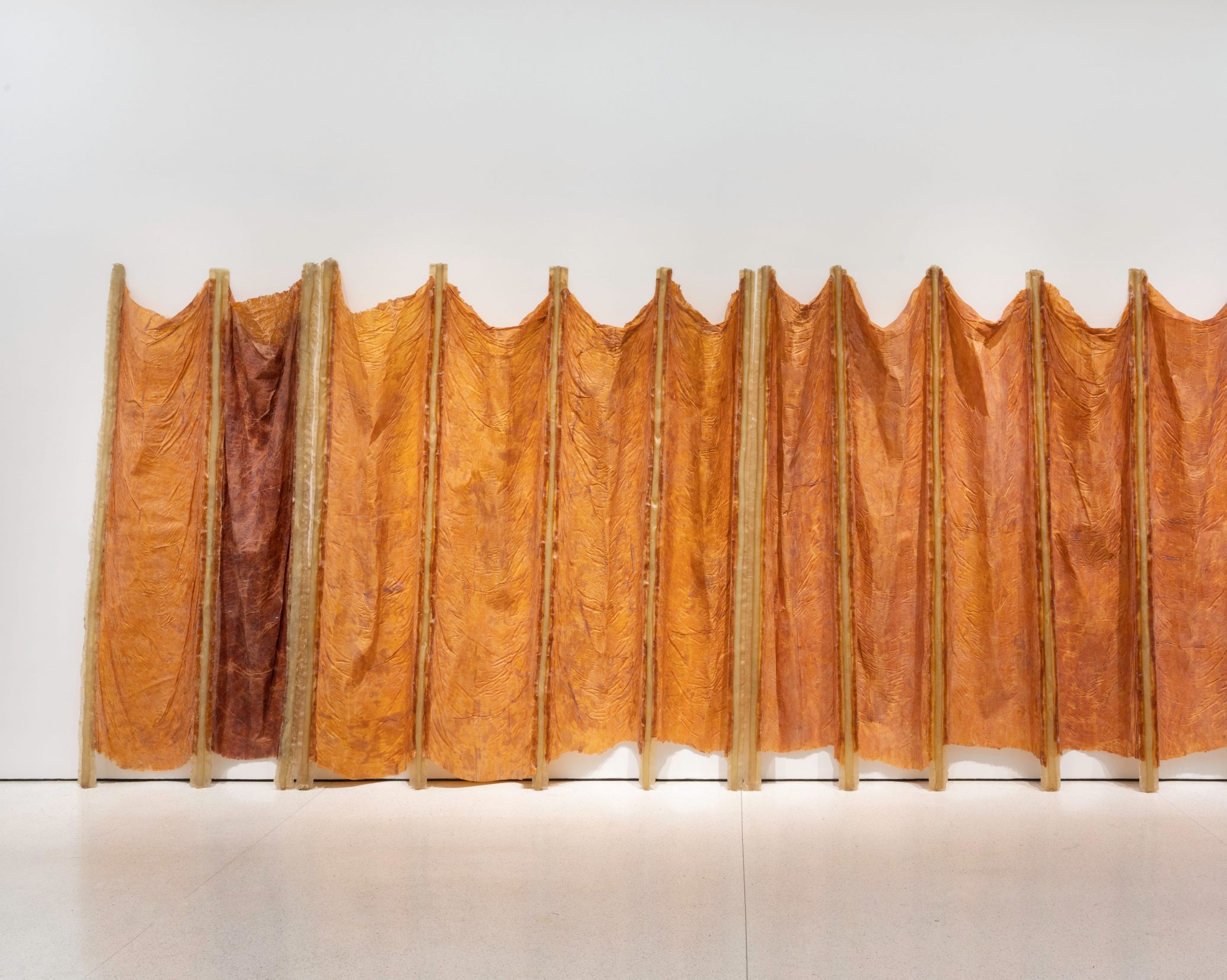
That is, of course, to illustrate how the work and attitude changed over the artist’s life. The artist and their work are so much more vulnerable to the power of the institutions once they can’t speak for themselves. Accordingly, a retrospective turns into an archive that tells of the greatness that was once here but also into a medium that can twist the narrative if not controlled by the artist’s foundation or family. Maybe we were not meant to see it. You must remember the piece Expanded Expansion (1969) created by Eva Hesse that the Guggenheim Museum showed again in 2022 (cover image of this article) [2]. A more than 30-year-old piece made from latex, fiberglass, etc., was slowly giving in to the flow of time. The piece was carefully stored and cared for, only to be taken out for the public to see. But if Hesse wanted us to see the piece even after so many years, why would she choose to work with materials that give in to time? There might still be a possibility that it was just never meant to last.
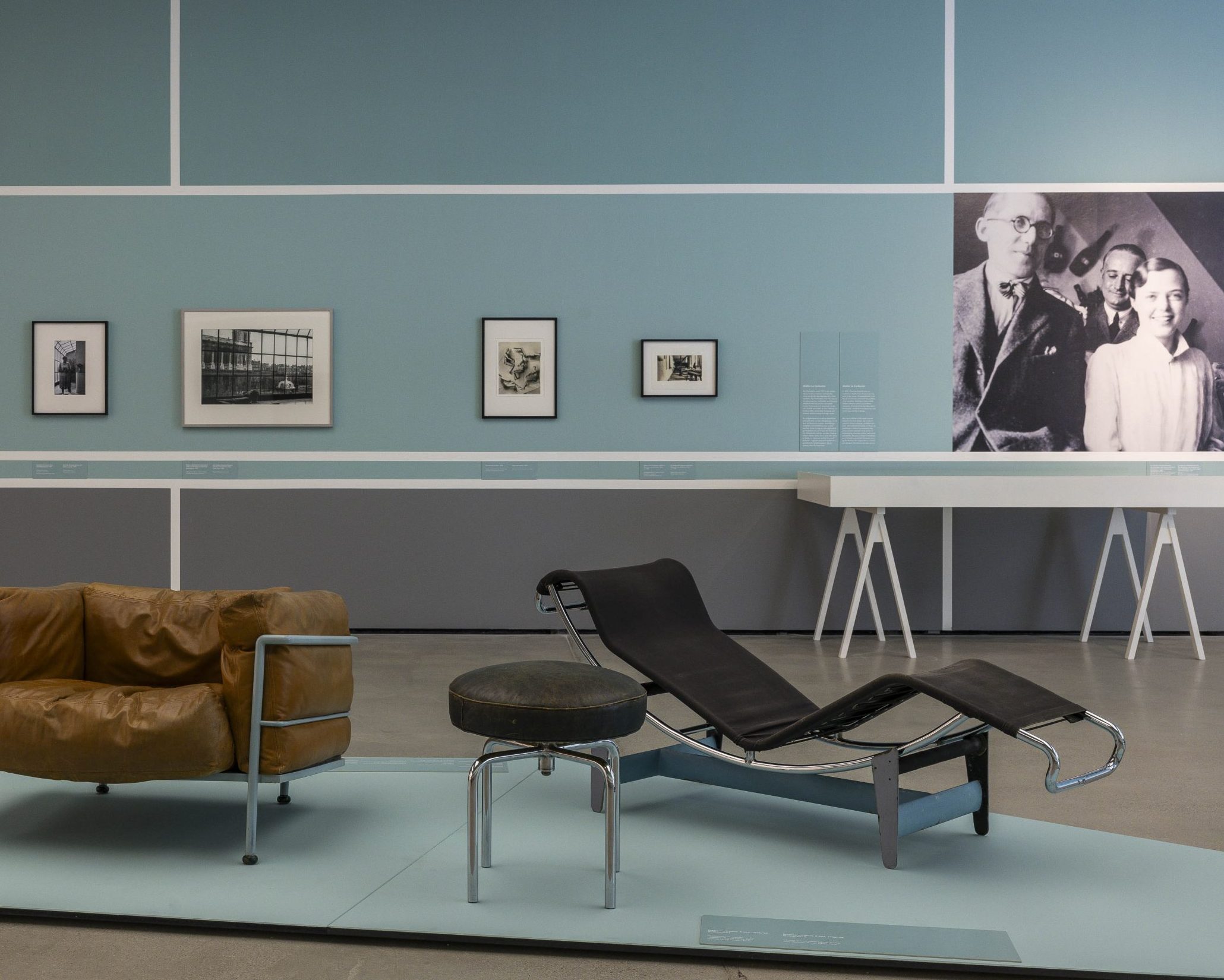
Charlotte Perriand, whose work will be on view soon in Salzburg [3], is one of the examples to illustrate the possibilities of the mechanisms of recognition. The French architect and designer will be shown within the frame of her own work, not as the silent partner to Le Corbusier that she was perceived as during her life. We can only speculate what the exhibition will show, but the usual narrative of women working side by side with their male counterparts often replicates certain patterns. Hardly recognized during her lifetime or recognized solely as a backgrounded figure. After her death, she was reinterpreted as the main figure, the protagonist of her own story. That is not to say the story didn’t happen. However, we need to question what this reformulation from one extreme to the other does to the canon. Perriand, once sidelined by society, which reframes her from collaborative work with Le Corbusier as an individual to whom history ties all the credit for the designs she has been denied. In this process of reinterpretation, however, we might lose the real history. Even though Perriand has been attributed some credit for her design during her lifetime, most of the work she completed together with Le Corbusier, such as the modular kitchen for the Marseille plan, has until recently been credited solely to Le Corbusier, or more broadly to the Le Corbusier studio, which in itself is just as broad description. A retrospective of Perriand and her body of work risks imposing on her once again the model of singular authorship, which she already experienced during a period of her life working together with Le Corbusier.
The retrospectives can then be perceived as a redistribution of visibility or aestheticization of past exclusions. Maybe neither. There is the chance that they are just really trying to fill in the gap we have in the art history books. But for the future generations of women, for the women artists who are training in schools or working in their studios right now, wouldn’t it be valuable to show them that the art world really sees them? With so many of these retrospectives, we risk relying on the finished story as the primary source of inclusion. But shouldn’t we instead open up our institutions to all of us? It is not only about women artists but about everyone who has been made invisible in the system within which our world operates. And those who weren’t visible – we have to acknowledge this fact at least – are those who don’t take part in the patriarchal system and/or who live and exist in non-normative ways. If we could just take a look at all the artists that still have years to define themselves, to finalize their work, and to develop into people who are more complex than we could ever imagine. The painful part of the issue is not as much the lack of recognition as the aspect of being seen, or not. The aspect of making art that can reach someone else, that can send a message, that can plant a thought, art that is an original form of self-expression.
The retrospectives are not posthumous recognitions but evidence of structural delay. It is evidence of our inability to show the past in relation to the present instead of locking it within one story at a time. Celebrating a passive subject rather than an active agent is to reproduce structural exclusion. What would we have to do to change the logic of the canon continuously, rather than trying to fix it one artist at a time, only after they are long gone? We can start by listening. Listen to the artists who are here now, and remember those that have passed. But not as stories that can be put into the scheme of Greek drama, but rather as stories of ordinary people who made art and have been given the privilege to be seen and recognized.
Footnotes
[1] Nochlin, Linda. “Why Have There Been No Great Women Artists?” ARTnews, vol. 69, no. 9, January 1971, pp. 22-39, 67-71.
[2] https://www.guggenheim.org/exhibition/eva-hesse-expanded-expansion, last accessed April 30th, 2026.
[3] This text has been published as part of Satellite 1 prior to the opening of Charlotte Perriand’s exhibition at MdM. Therefore, it does not constitute a critical review of this exhibition but rather represents an engagement with a premise that is currently en vogue.
is a human being and a student of MA in Architecture and BA in Fine Arts. Her writing is focused on themes of representation and labor in the arts and architecture, trying to critically position herself within the world. Currently, she is working on sculpture-objects and site-specific installations that examine the processes of self-soothing in art production.
Satellite 1: The Portrait in Art Criticism
The portrait is considered one of the oldest genres in art criticism. Today it faces particular pressure. As a format structurally reliant on proximity and consent between writer and subject, it tends toward affirmation. This tendency is amplified by a broader shift in art journalism: reviews are increasingly giving way to interviews, and critical judgment is yielding to conversations with artists who comment on and contextualize their own work. Criticism is substituted by self-disclosure; judgment, by agreement. Yet it would be too simple to read the portrait solely as a symptom of affirmative journalism. It remains a format with genuine epistemic power – provided it critically interrogates and negotiates its own logic. The conversation, the close-up, and the relationship between writer and subject all hold potential that reaches far beyond the functions of simple marketing. What does an art criticism look like that does not abandon the person and the personal but sharpens it? What forms, what stances, and what formats allow for critical distance without coldness – proximity without complicity?
Satellites series by magazin53a
This new publication series aims to position artistic and art-critical practice within the context of supra-regional discourses while also showing how engagement with specific questions can be related to local contexts. Writers with topics that reach beyond Salzburg are explicitly welcome. The Satellites aim to contribute to a broader regional discourse. The first Satellite is devoted to the portrait.


Das könnte dich ebenfalls interessieren
Vom Fliegen. Im Gespräch mit Sigrid Langrehr
Mai 3, 2026
Das Porträt im Zeitalter seiner digitalen Belanglosigkeit
Mai 3, 2026