Review

Agnes Scherer’s Three Wicked Games: Folk Games for an Age of Self-Performance
5. Juli 2026
Biljana Puric

Drawing on Francisco Goya’s depictions of folk games, Agnes Scherer reveals how contemporary social life is shaped by performance, exclusion, and the desire to belong.

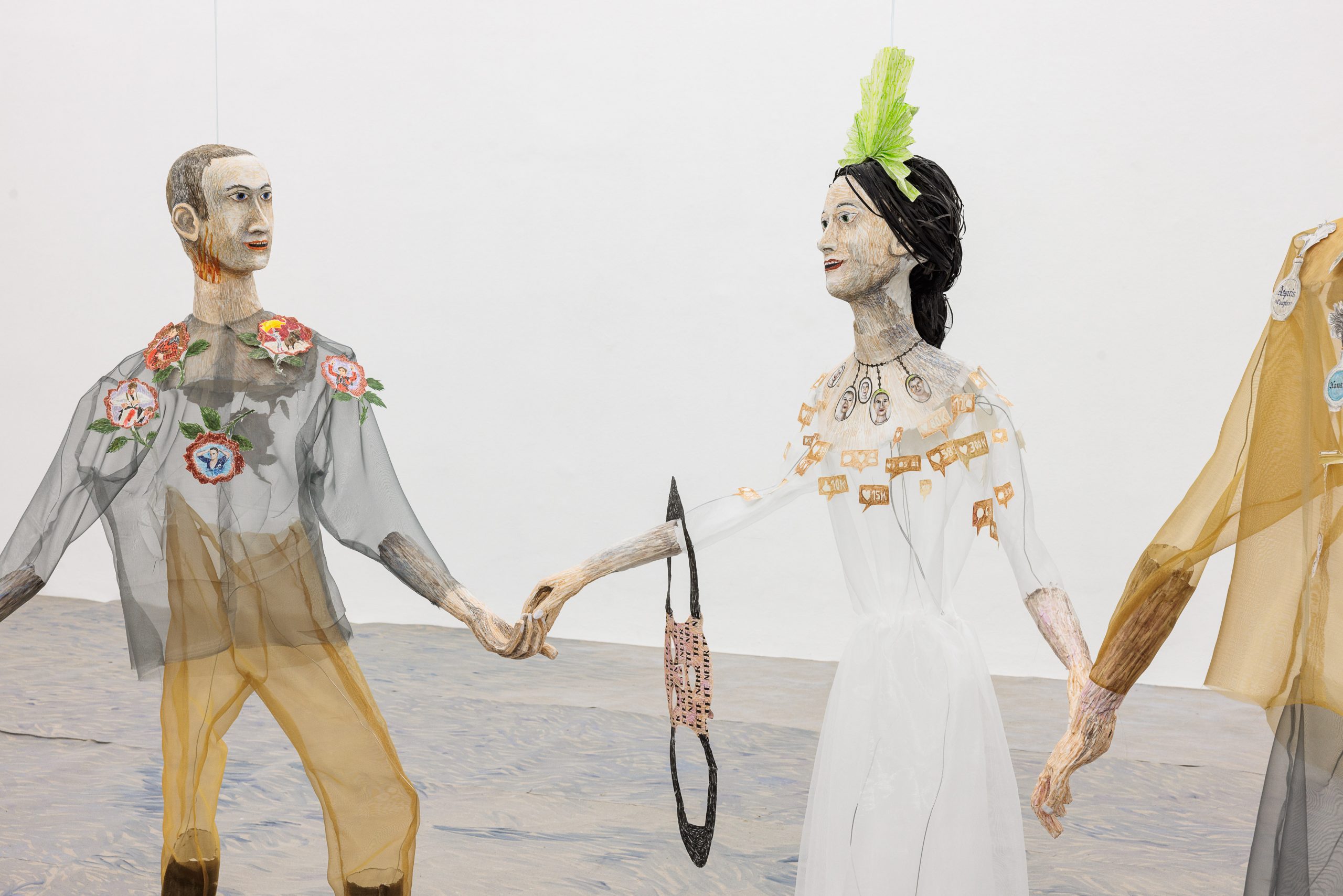
Agnes Scherer, Three Wicked Games, 2026. In Auftrag gegeben und produziert vom Salzburger Kunstverein. Kuratiert von Mirela Baciak. Foto: kunst-dokumentation.com

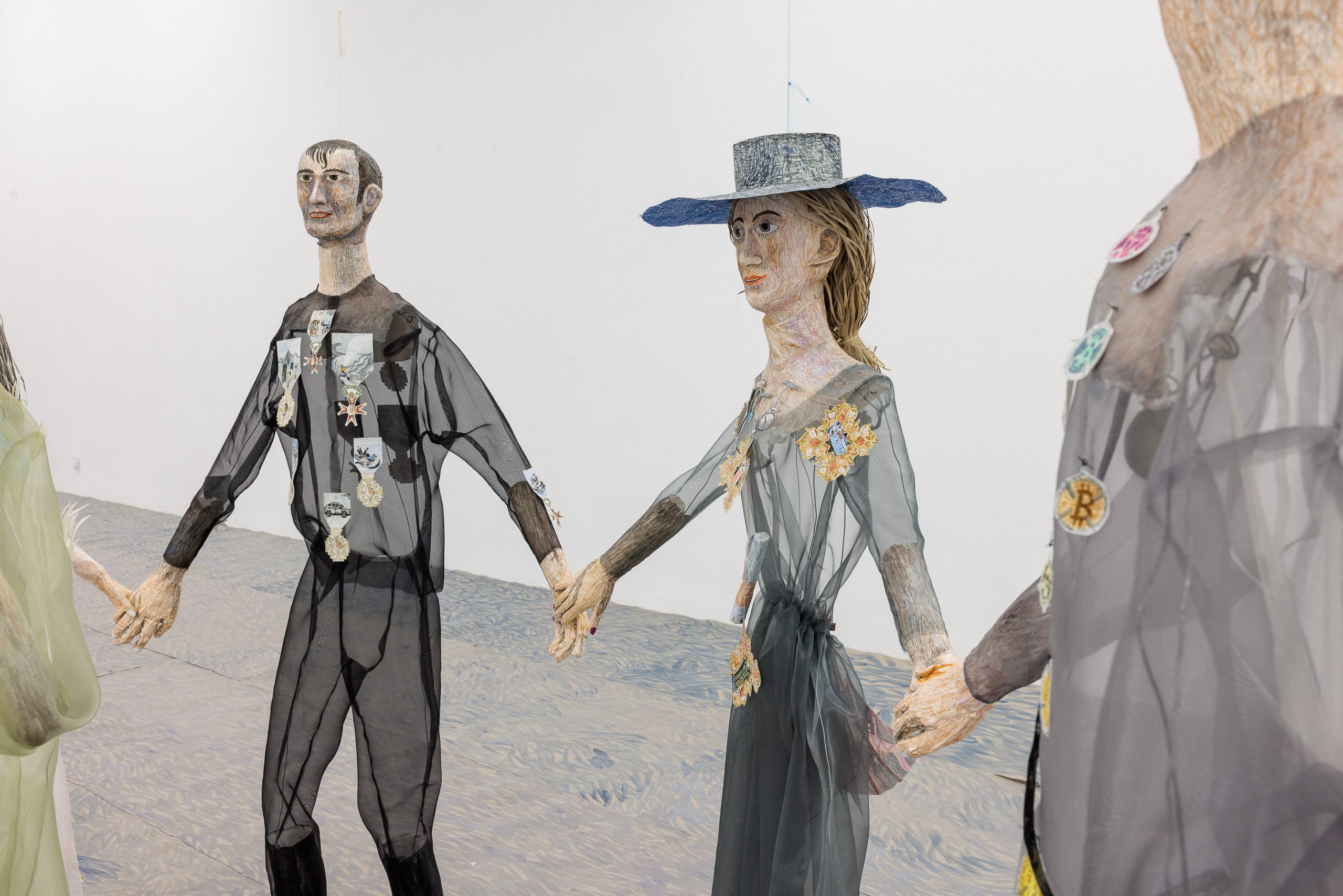
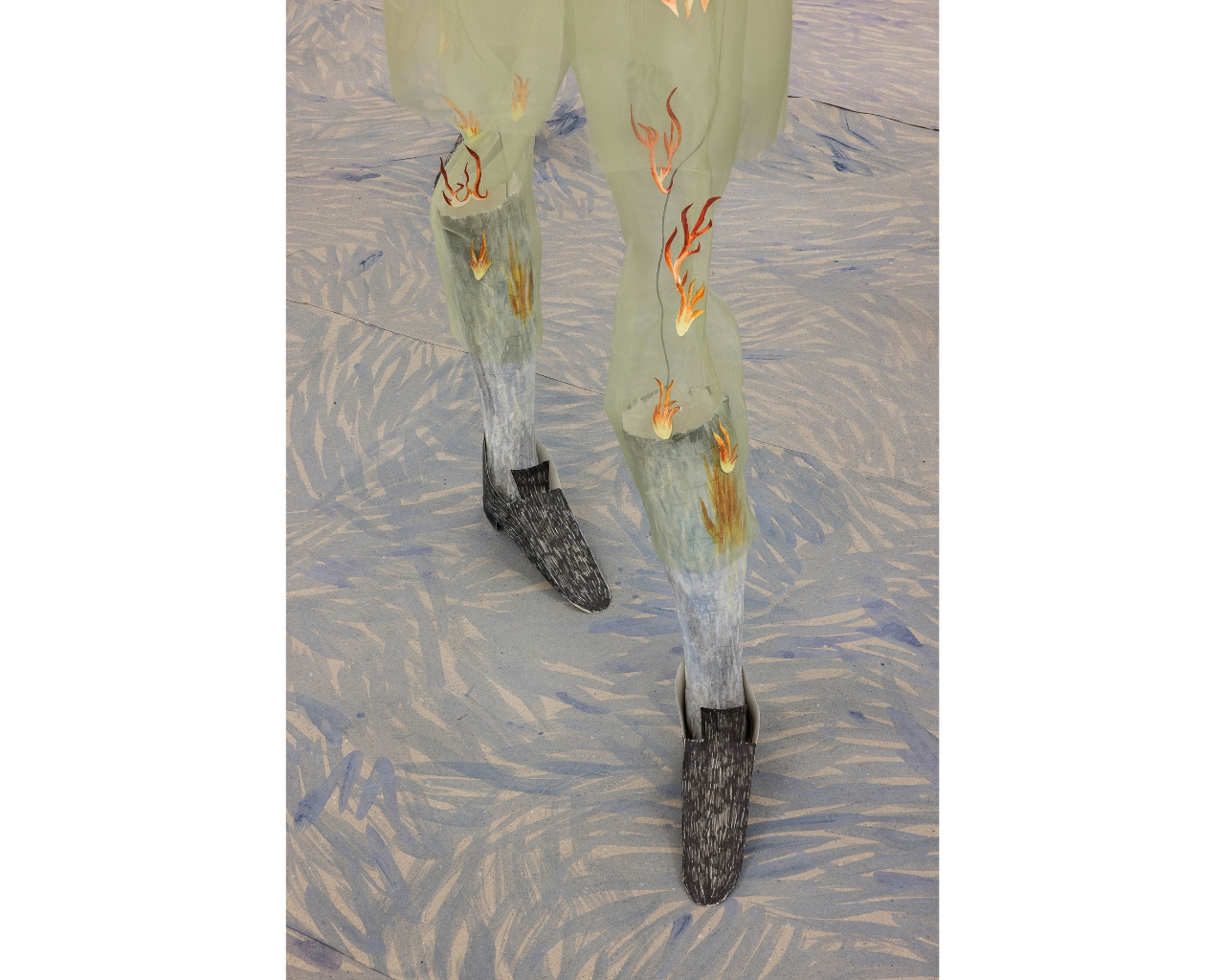
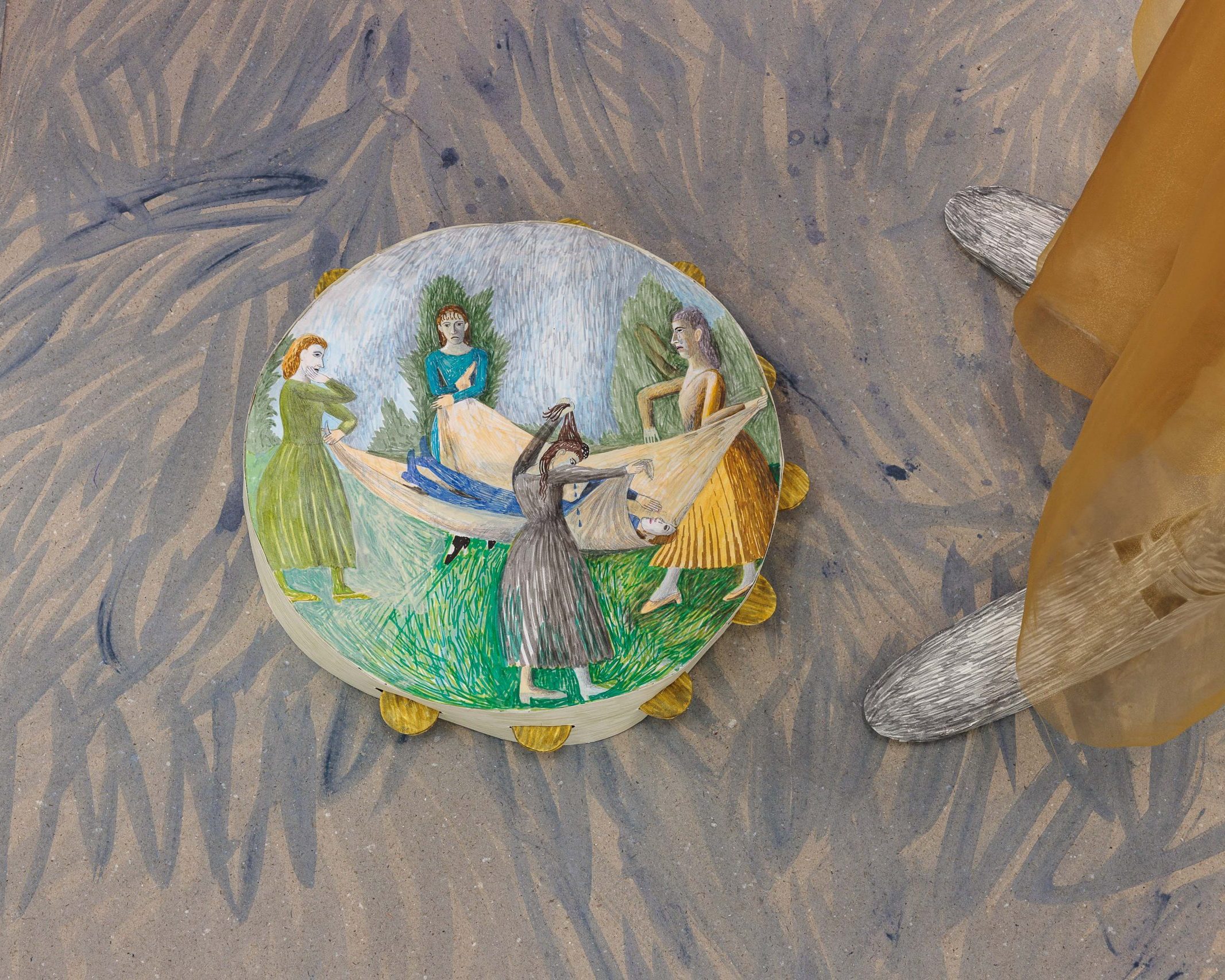
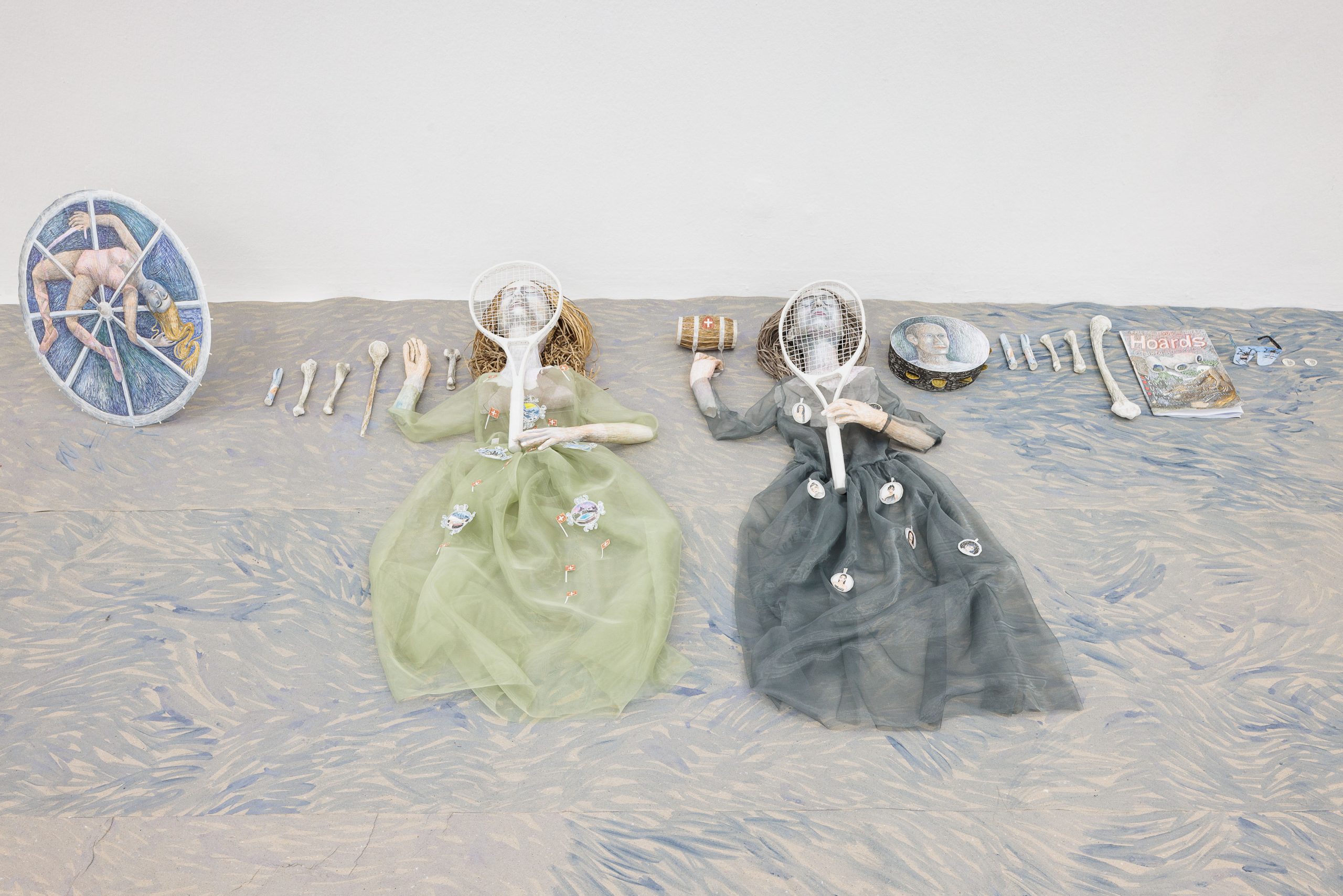
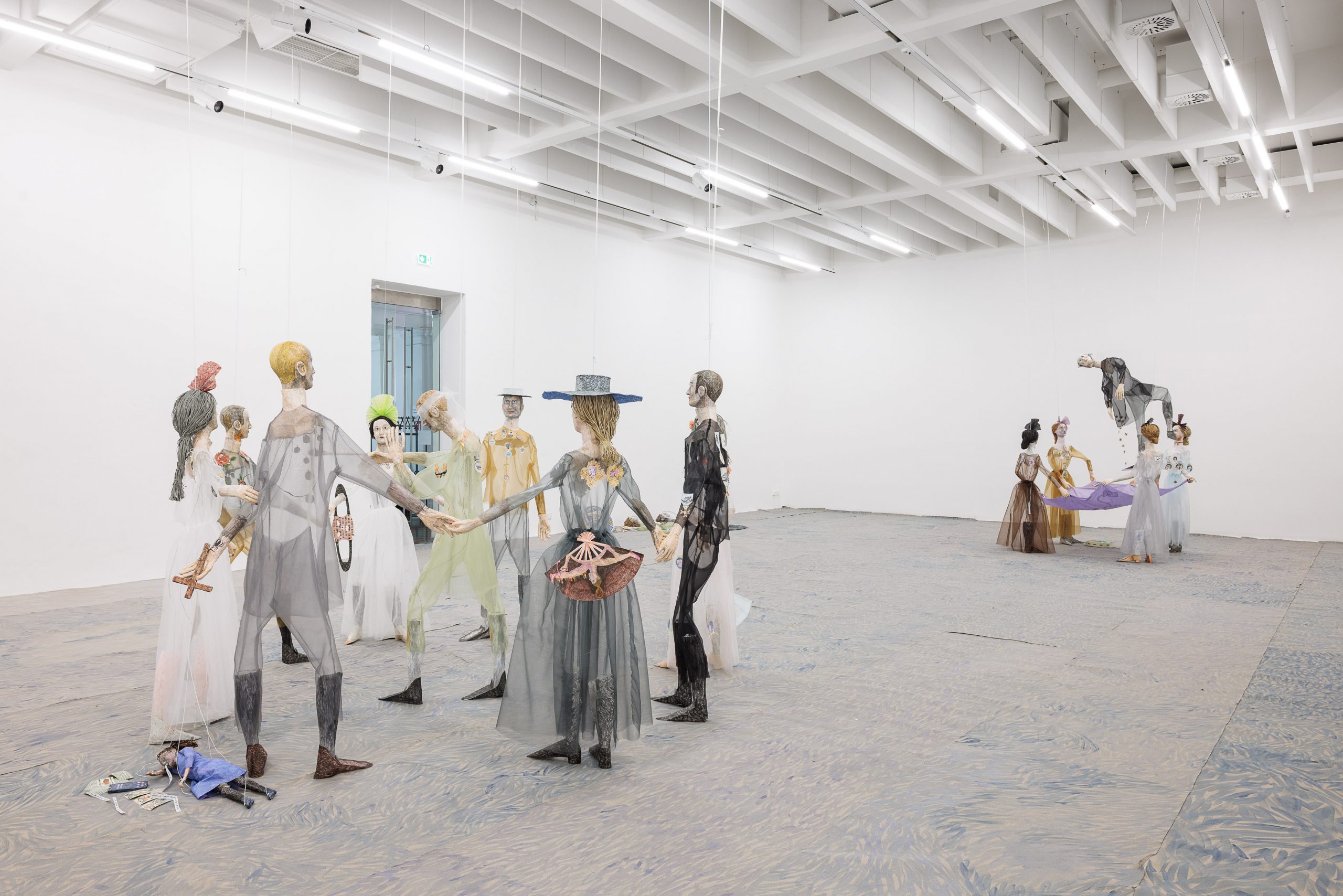
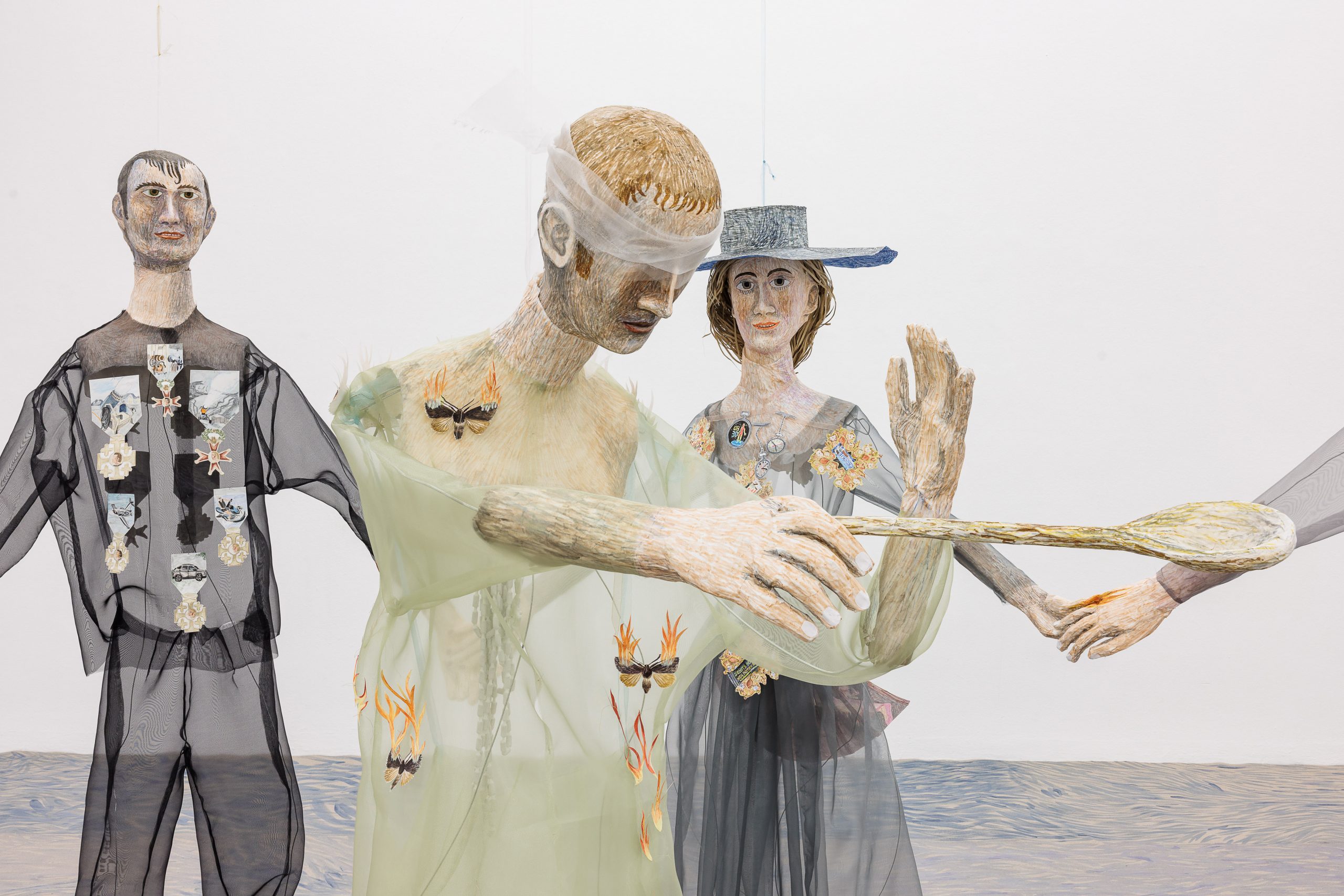
An enhanced sense of vulnerability permeates the viewer upon entering Agnes Scherer’s Three Wicked Games at the Salzburger Kunstverein. The exhibition, comprising three pieces – Untitled, The Findom Foulard (El Pelele), and La Gallina Viega (Can You Manipulate My Glasses…), all from 2026 – is set within the vast central hall of the Kunstverein and crackles and rustles with every step. The floor, covered wall-to-wall with kraft paper accented by quick brushstrokes of bluish paint, unifies the works into a coherent whole and generates the installation’s distinctive acoustic effect. Scherer’s pieces, inspired by and drawing directly from Francisco Goya’s celebrated tapestry cartoons, represent three groups of human figures engaged in folk games, including tossing a straw man in the air and playing blind man’s bluff. The figures’ eerie presence of ruffled organza, wire, paper, and ink draws viewers into Scherer’s world of references from art history as well as considerations of contemporary society and individuality. While the figures seem to thin before one’s eyes, every movement through the paper-strewn space is a physical and aural reminder that things can break and tear apart at any moment, including one’s sense of self.

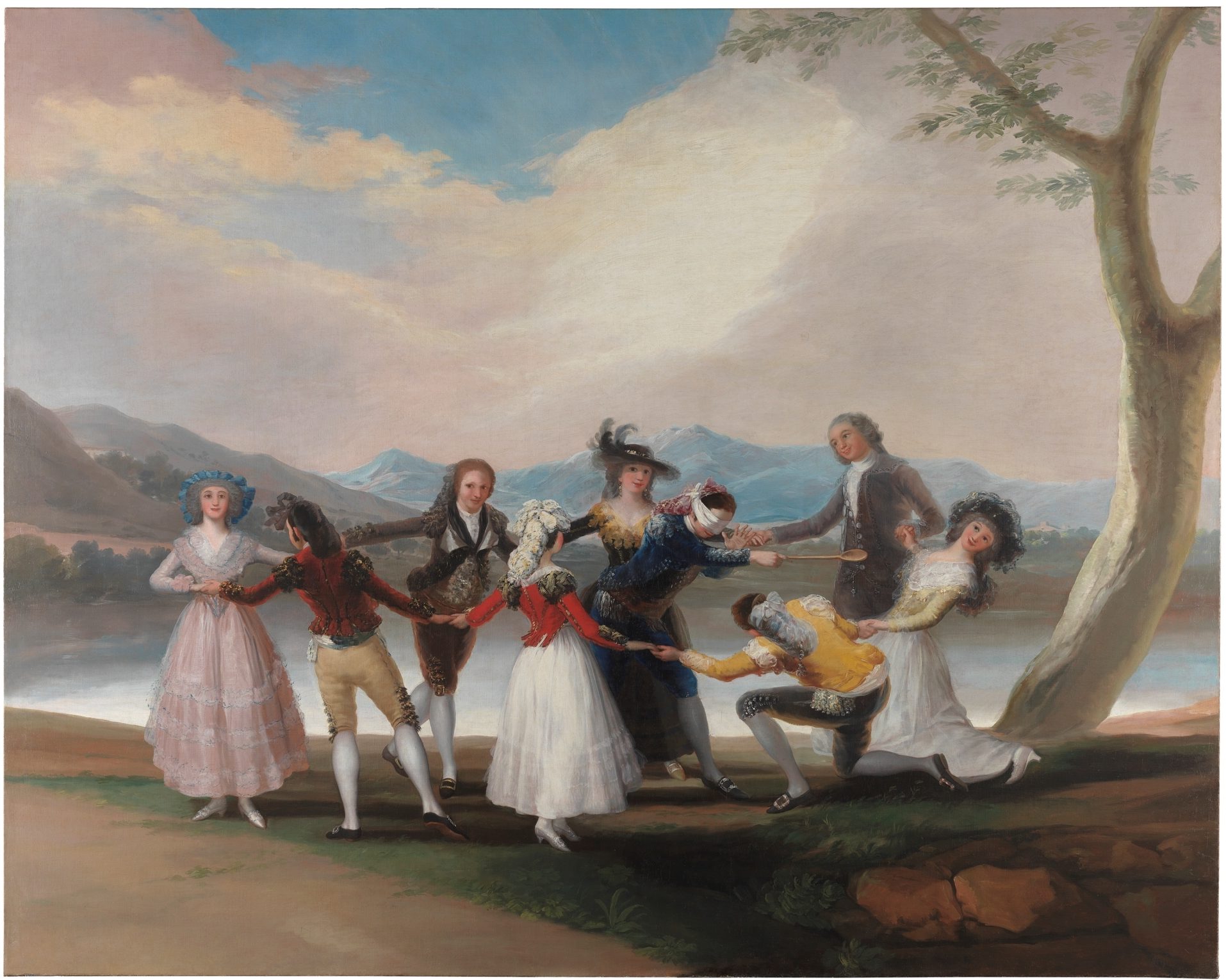
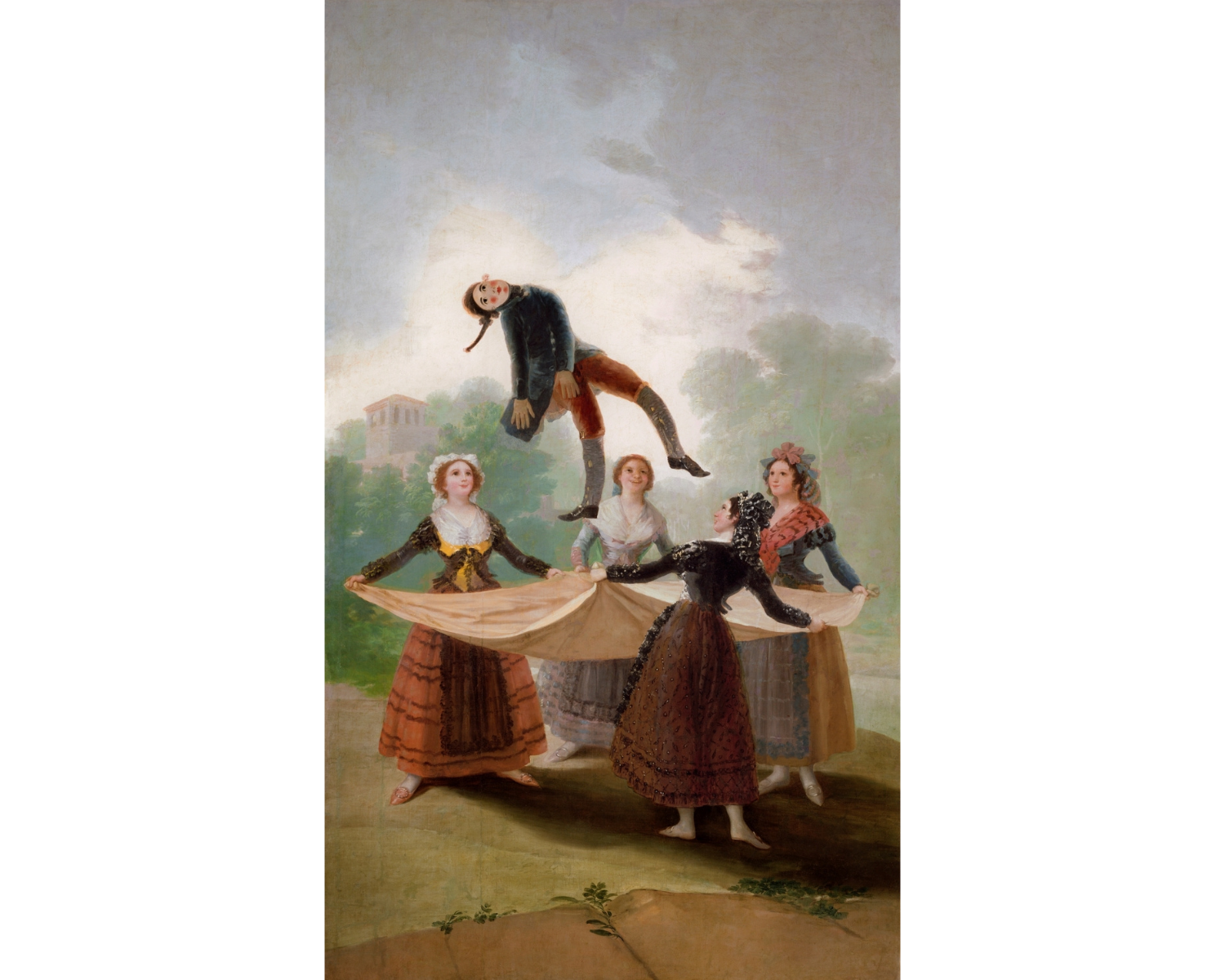
Francisco Goya painted his tapestry cartoon series for the Spanish kings Charles III and Charles IV between 1775 and 1792. Scherer draws on two pieces from the series – Blind Man’s Bluff (1789) and The Straw Manikin (1791) – which, while seemingly innocuous at first glance, harbour an underlying social critique of their time. Goya’s tapestry cartoons convey a general sense of happiness on the surface; they are full of “grace and ease and in many cases […] innocence”, but also hold “hints of violence” and “suggestions of the darker motives.”[1] While not so overtly critical as his Caprichos, the cartoons nonetheless question societal norms and human relationships.

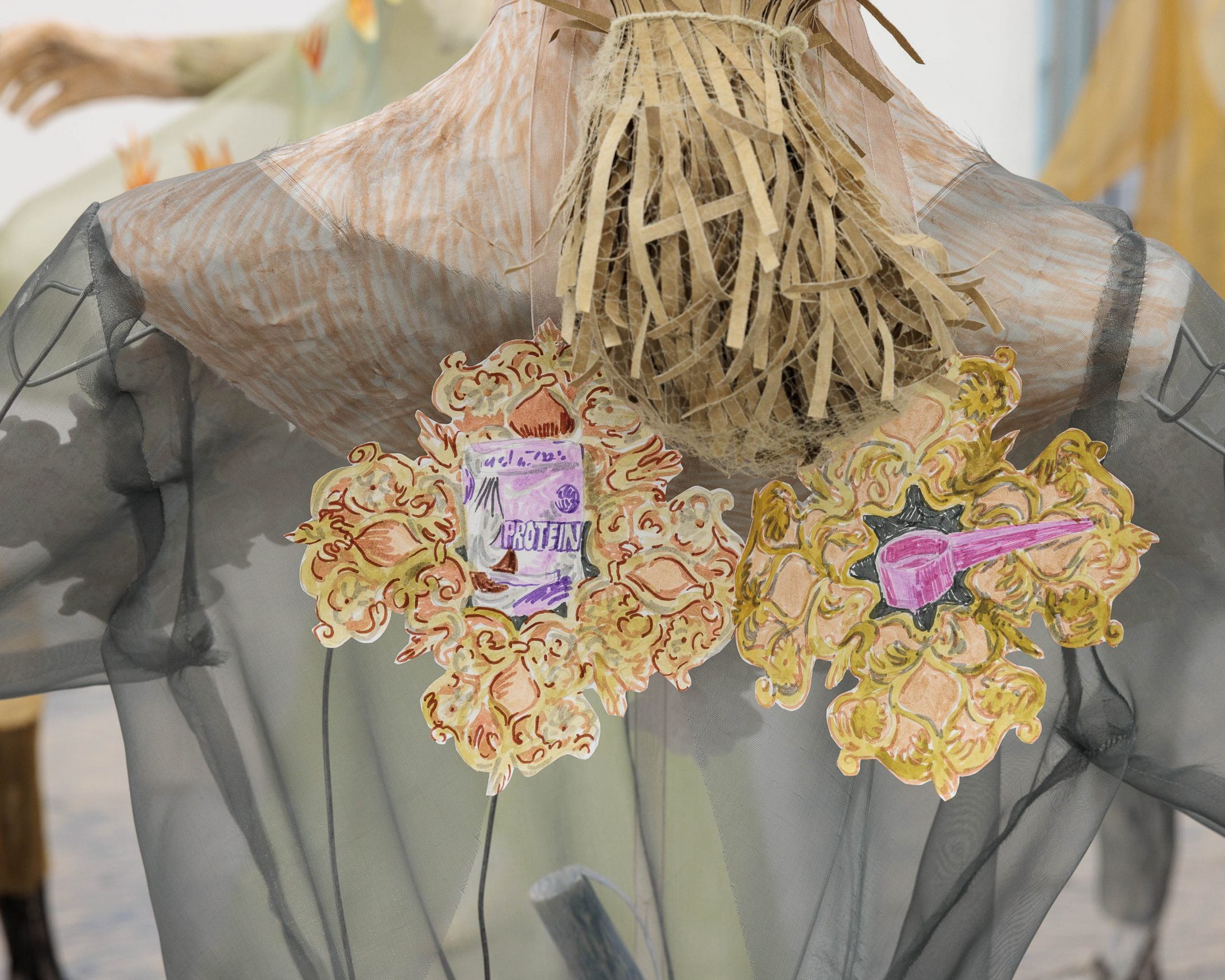
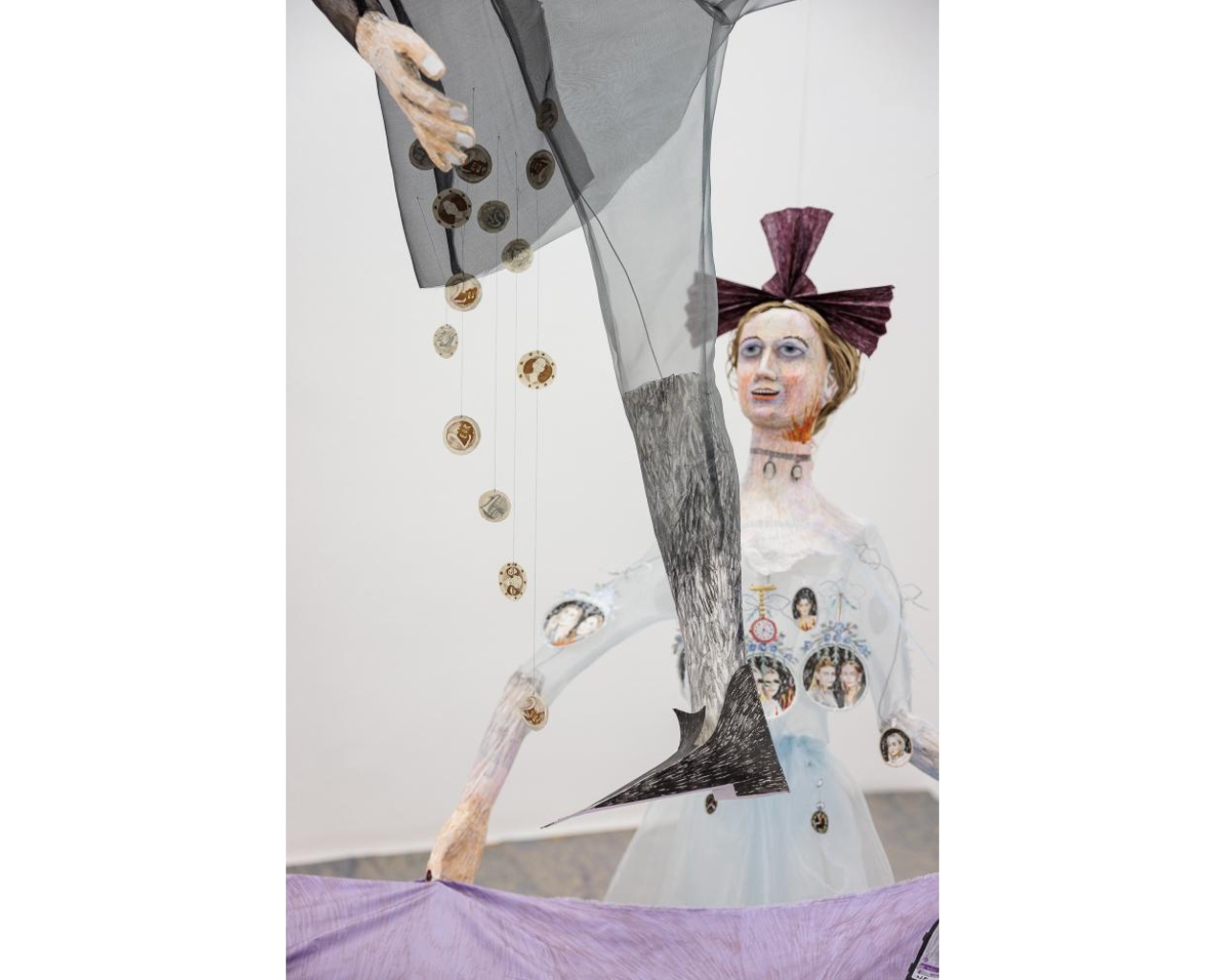
Three Wicked Games combines a similarly seductive visual language with a strong critical stance. Scherer’s figures are transparent, with organza and wire outlining their bodily shapes – no material substance underneath. The figures’ heads, hands, and feet, however, are made from paper, marked with pen strokes that evoke the texture of wood, adding heaviness and grounding, as though not all of the self is yet lost beneath the layer of social performance. The figures’ bodies are heavily covered with paper trinkets, resembling cameo brooches that bear the hallmarks of contemporary capitalist society – the illustrations on them feature yachts and luxury cars, social-media rants, portraits (or selfies?), and abundant products of wellness culture. To note every detail seems a futile attempt. Instead, perusing some of them reveal hierarchies of class, gender, and power that Scherer presents and subtly stabs at, while offering little resolution. It is difficult to position oneself in relation to the installation. While the abundance of detail is uncannily familiar, the installation as a whole remains strangely muted and detached. This muteness comes not just from the absence of a soundtrack – the cheers, laughter, and even mockery that such games surely provoke – but also from a halted expression that unfolds as a series of suspended choreographies, whose social world remains closed, hampering the access to its internal functioning. Even the positioning of groups far away from each other renders them isolated, absorbed in their own social logic, which the viewer needs first to understand and be part of to be able to break it. 

The prostrated figures with tennis racquets on their faces in one group and the children’s games the other groups enact define a world that mirrors our own, one of staged identity, status, and the desire to belong but the image is fragmented into many pieces: the playfulness is interspersed with ‘wickedness’ of many social scripts found throughout the installation. The cameos reveal contemporary failures of communality that cannot go beyond exploitation and self-fashioning through prescribed tropes and roles. The male figure suspended in the air from The Findom Foulard (El Pelele) has its mask slipping to one side, revealing the face beneath. Tossed in the air by an all-female group, the figure’s predicament seems to be highlighted by the unfolding drama underneath, where paper mobile phones unroll the social commentary across the blanket the figures are holding. Scherer depicts a trap of belonging, of being included in or excluded from a social circle, which could create equal amounts of anguish and problems, regardless of which position is chosen. To belong requires the performance of socially prescribed identities, while exclusion leaves one outside the structures that organise social life. With the mask falling down, the figure drips paper euro coins. Symbolically stripped of its value, it is almost impossible for the figure to be part of this group that requires staging and carefully curating one’s own presence through many trinkets that engulf its members. 

Agnes Scherer, Three Wicked Games, 2026. In Auftrag gegeben und produziert vom Salzburger Kunstverein. Kuratiert von Mirela Baciak. Foto: kunst-dokumentation.com

Goya’s tapestry cartoons started with normative views of society, and “the Enlightenment aesthetic principles of (good) taste, good behaviour, and easily accessible forms of pleasure.”[2] Nevertheless, they prompted critical questions about given social scripts. Goya’s cartoons fragment the viewer’s attention through competing focal points that disturb the anticipated narrative and set relationships between humans and the world out of balance.[3] In a similar vein, Scherer offers a plethora of visual moments that can be approached separately, while disturbing the expectation of an innocent play. Both artists depict the continuity of human failure, behavioural conditioning, and broken systems of valorisation where play is a metaphor for mechanisms that both reinforce and expose social norms. The fragility of the presented choreography and its exclusionary atmosphere operate as mechanisms of attraction and rejection against which viewers could evaluate their stance – it is an invitation to join the games and simultaneously to step aside, observe. An invitation, perhaps, to break the circles that enclose the ‘wickedness’ of our reality. Instead of treading carefully, in fear of cracking the paper below our feet, perhaps Scherer invites us to do just that. To break the ground, tumble down, fall, and ultimately find a different footing, to stand on different foundations. To reject the position of a pawn and beat the game.

Footnotes

[1] Anthony J. Cascardi, Francisco de Goya and the Art of Critique, Zone Books, New York, 2022, p 55.
[2] ibid, p 60.
[3] ibid.

Agnes Scherer: Three Wicked Games

Salzburger Kunstverein

Tue–Sun: noon to 7pm