

Stock Eyes
9. Januar 2026
Jess Łukawska
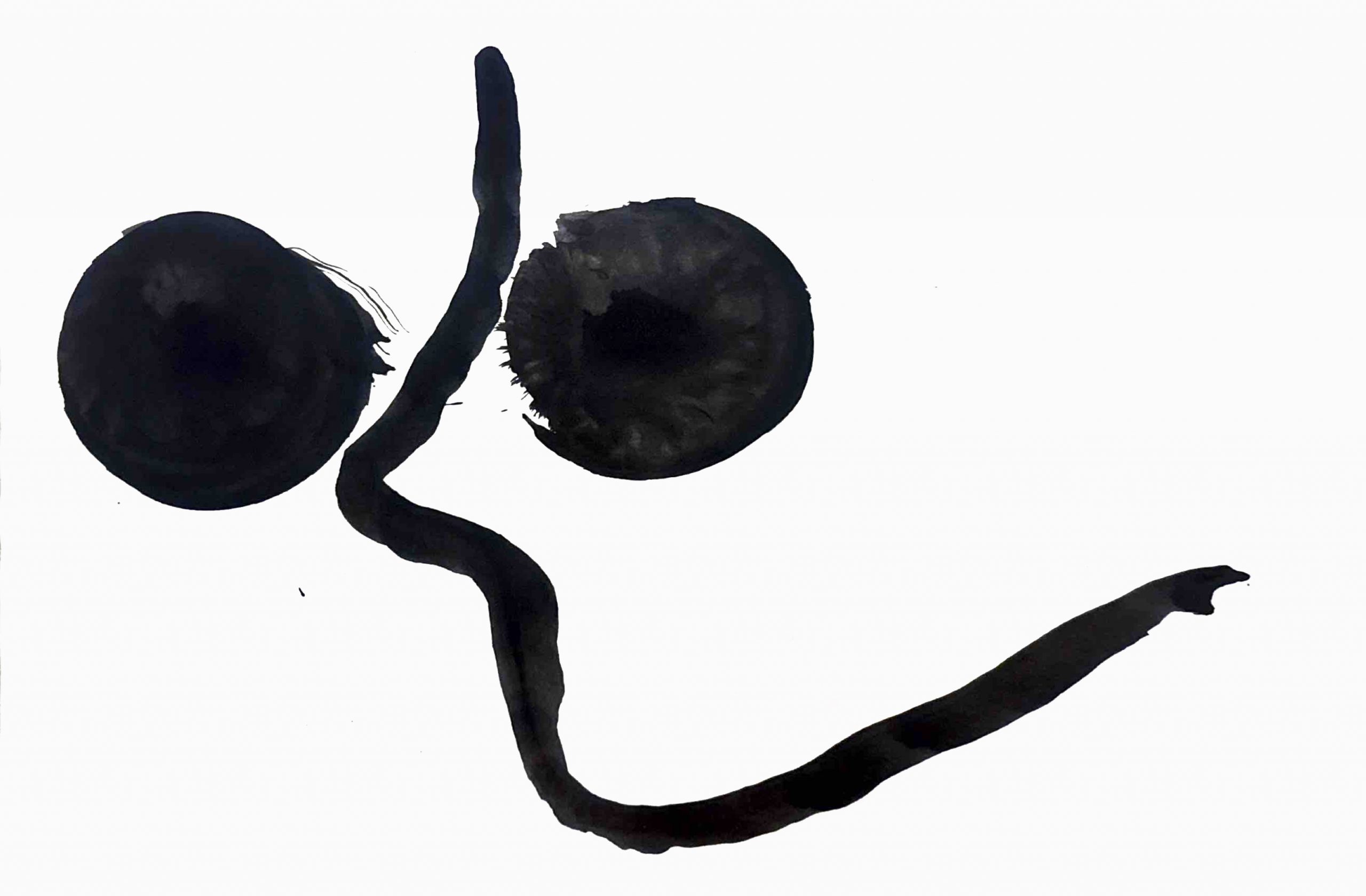
Your search engine is your visual training field. In the essay, born from the Salzburg International Summer Academy, I reimagine Internet browsing as a “School of Seeing”. Exploring how our daily digital vision, the hunt-and-gather of search engines, has become a core part of our visual education, changing not just what we see, but how we see, physically
The piece posits that our relentless daily use of search engines and infinite scroll is anything but passive; it is an active, uncredited training ground for our visual perception that fundamentally alters the very tools we use to see everything else, including art. Writing about a visual culture so bloated and manipulative that it leaves us with clenched jaws, slouching postures, and a feeling of powerlessness, I examine a consequence. I do not ask what we can find on the Internet, but if we can even see anymore.
[2022] Two years after COVID-19, two years after we enthusiastically lost interest in the NFT market or, in some cases, slowly started losing it, my eyes used to stare a lot at the blank white wall in my apartment. I barely archived anything at the time. I was new to using platforms like the Internet Archive and Are.na(1), and I was not adjusting my Google search filters. Because everything was right there: on the Internet. We were more than welcome to take more than we could ever carry and stock up on whichever device we got. But it was not as if we could stop the Big Four from ruining it all for us only a few years later. Probably as a consequence, our eyes, eating from the open palm of the Internet, kind of forgot how to limit themselves for their own sake of self-protection.
[Since 2022] We are no longer exposed to the deterministic online experience of limited computing power that would actually provide us with the piece of information we are looking for.
[2025] In June, I was trying to help my girlfriend with making a low-key A2-level French presentation on Bauhaus. I was about to find an image of an Italian Bauhaus villa I recalled from my architecture classes. When typing the phrase into Google Search, nothing relevant about the Bauhaus movement popped up, no interesting stories about the building on the coasts of Italy and no academic articles. Nothing but ads, really. “Modern Bauhaus” or “Bauhaus-style” villas on booking.com or other property websites, looking more or less interchangeable. Soul-sucking, miniature, low-resolution window images that I refused to click on awed by how fast my eyes had already scanned four Google pages, and each time they had proofread something legit, they were mistaken. My patience was being tested. I clenched my jaw so tightly that I began to feel glad that at least I realized how much I slouch and ruin my bite by conducting this unnecessarily intense search for a single image for the presentation. I deeply regret that I did not record the specific names of a few of these villas when they were shown to me. My information-seeking eyes move through the Internet of the vibe-coding era of clustered and oversaturated search engines. These eyes witness the fast-fashionisation of software – a cycle of relentless updates and expendable digital products. Its creation and maintenance consume more natural resources than ever before, from the energy of vast data centers to minerals in our devices. Simultaneously, it also exploits more human resources through precarious coding labour, content moderation, and the attention economy. But in this specific search for information, particularly the kind I have a feeling I once knew but cannot recall the name of, and which I never noted down anywhere, my eyes are powerless; therefore, I am.
Do you keep a personal archive?
In a documentary “How It’s Made”, which I remember from my childhood, it was shown how they produce the Fiat 126. Sometimes I imagine watching a similar documentary, but informing on how and why on the Internet we see an ocean of useless words when looking for some piece of information or visual component. A literal “How It’s Made”, because I do not know how and why the Internet went that bad that fast. If I tried to type down the question to Google, I would probably receive some half-statement by Gemini – cobbled together from a bunch of hollow and nebulous articles, probably going for selling something or using their surface to tire our eyes with ads. This particular type of add that irritates my entire nervous system, which I would like to be able to block out forever, because it inflames my eyes, forcing them to watch a single mother with a child who can save her family from poverty only if she undergoes bimbofication and stops reeking of green. In consequence, a tall brunette in a suit abandons his upstart lover for her. And to achieve this – the mother’s happiness – all I have to do is move some blocks on the board. Which is really uncanny because it’s not an arcade game. It’s mud, the quicksand of contemporary internet visual culture. An advertisement for a game named “Garden Scapes,” which you can avoid if you have enough money to block ads on every website. After all, you won’t see such ads outdoors – on billboards or at underground stations.
And there are other, less recent, disturbing ads on websites that I don’t want to click on because I will certainly be greeted by a gigantic, simply too large, request for permission to use cookies. My eyes have been trained. I can anticipate this. Being exposed to so many of these commercial intrusions has conditioned me to scrutinize everything, searching for places where I wouldn’t see it. And looking at anything considering my eyes’ safety.
Do you relax your jaw regularly when looking at stuff online?
[2022–2026] In search of controlled perception – agency-oriented perception – I could look into search filters and simply exclude everything created after 2022. As I suggested at the beginning, this was the year of The Change, was it not? But change here is not a single moment; it is a field that plays out before our very eyes. And my question, as someone without a digital personal archive, and the tangible, if chaotic physical one, is: Can we look at art in 2026 when every day we look at everything and nothing at the same time? Just as a physical archive demands a slower, more deliberate kind of attention, perceptual agency requires a different kind of discipline, which resists the pace of the feed. How can we process looking at a still life when we are being conditioned to become one?
I am concerned about the condition, quality, and production of art. At the same time, I worry about sight, vision, and eye-training. I worry about our brains, which are more and more interested in seeing “everything.” Accelerating into dopamine release only if they saw everything: in all potential directions, perchance dimensions – as if the limits of being moved at the quality of everything, all the details at once, only could determine that known feeling of satisfaction stripped of anything else that would be anyhow new or surprising. Capturing everything, the total sequence of details at one moment, as the destination. Just like the Internet offers us everything, because that was its goal, was it not, to maximize the generosity of information provided (providing?).
On the Internet, everything is 80% something and 20% nothing. The Internet’s “everything” is bloated. Which makes our eyes bloated, to the point we seek to steal someone else’s eyes to be less overstimulated ourselves. Or generate them. Obtain “stock eyes,” useful to ignore the need for wonder and stick to merely staring. And to trash them as soon as they are used. Non-recyclable “stock eyes” are lying in conical piles next to every pop-up window with an advertisement with a picture. Piles of rubbish that, over time, can obscure our view from the level of our organic and weak eyes.
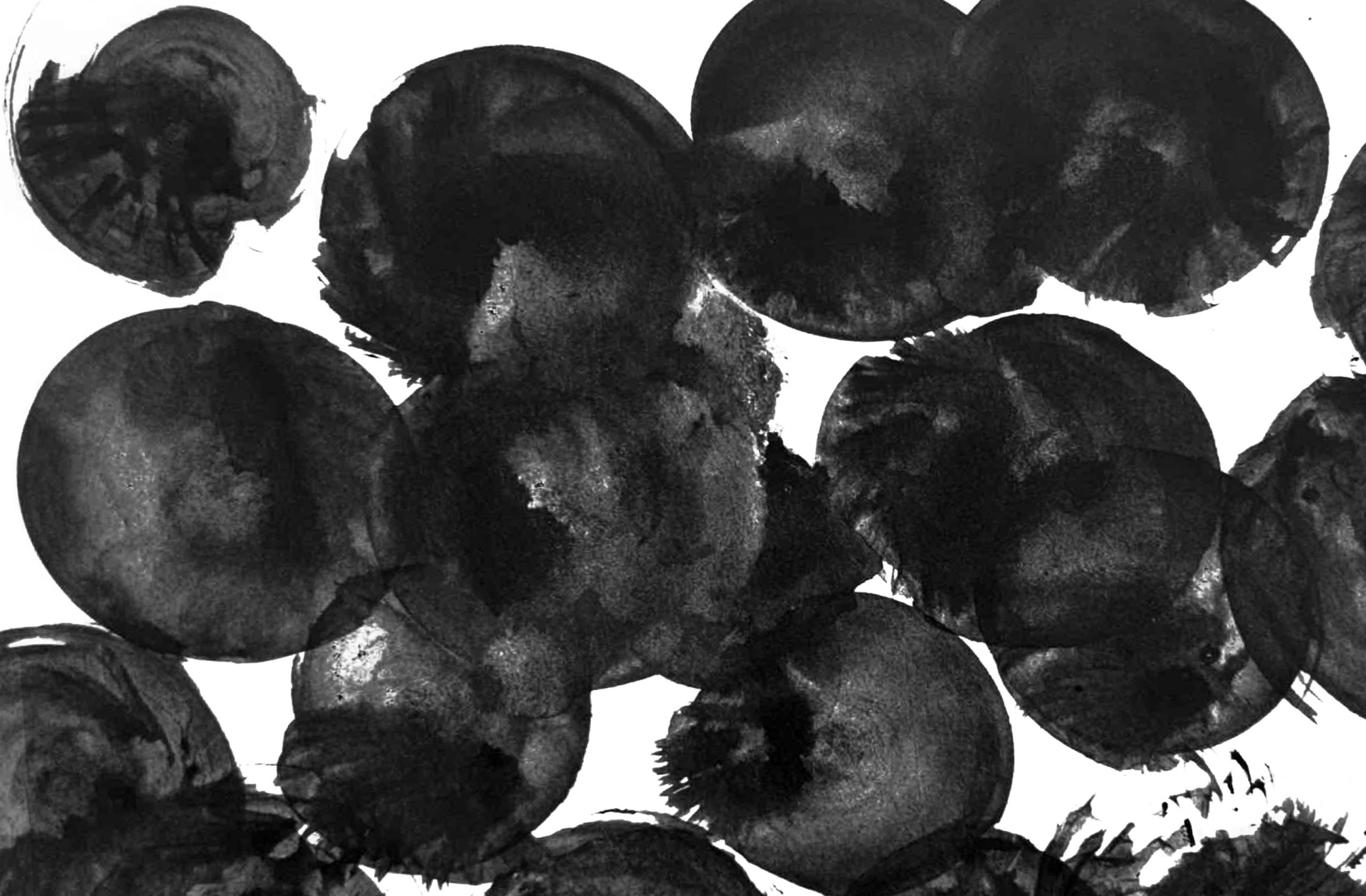
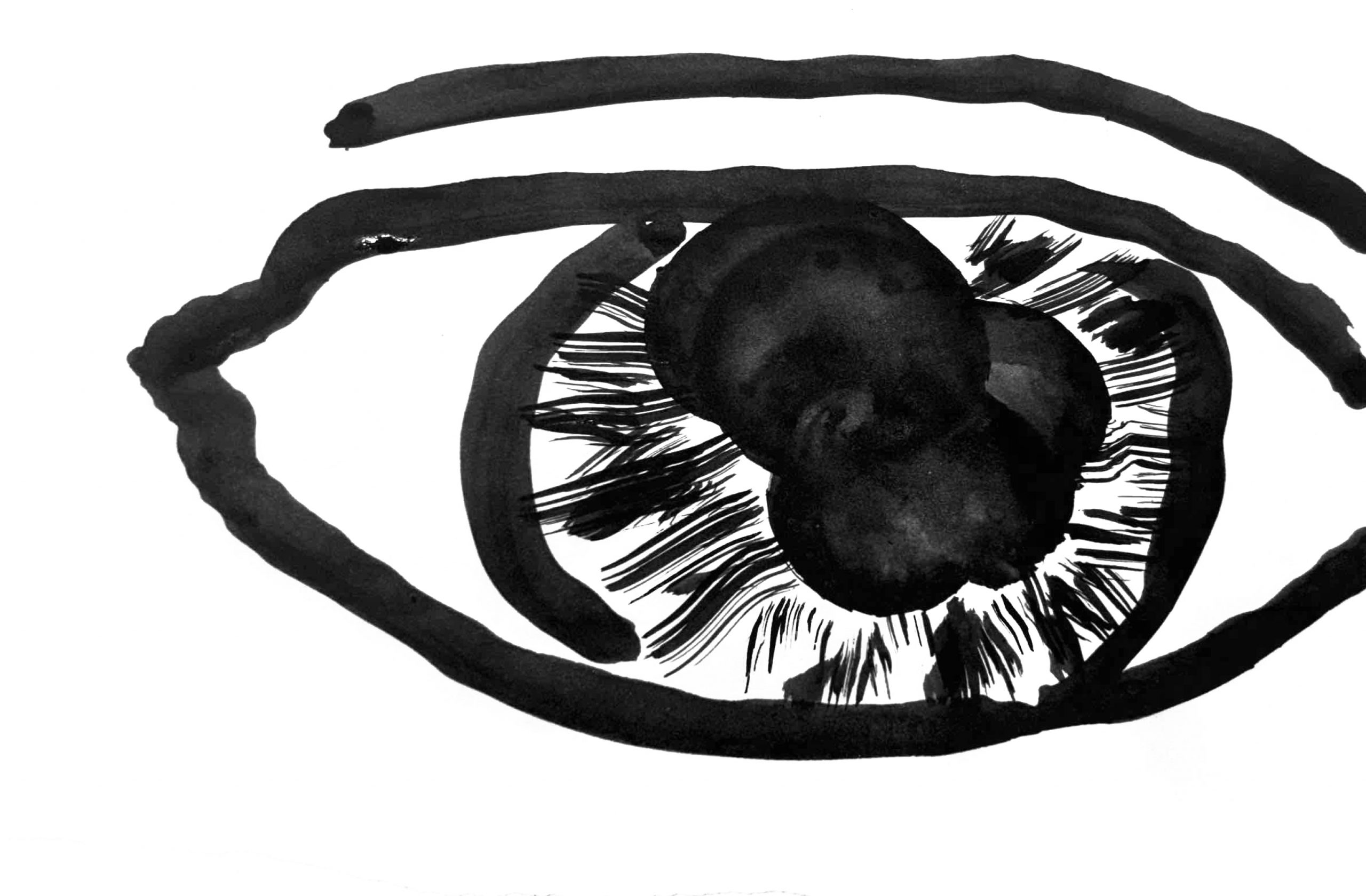
The Internet is breeding “stock eyes” in me, too. Forever adjusting to my “preferences,” which are supposedly for making me endlessly more comfortable in the sea of bloated content. Seeking for the easily digestible and therefore decorative [visual culture] in the realm of all possible instances of the visual that could be revealed in slow-burning viewing. “Stock eyes” are reformatting everything. They would turn darkness into greyish sepia if the user were too lazy to attune. And would conceal paint cracks if the user decides to blur out their vision because they are too tired of “so many things” on their mind. And the very prime option of “stock eyes” would be that they would erase every “limiting factor” that would come to mind. Regular eyes would approach the limit. Stock eyes would reach it.
They are a lot like Labubus, and Labubus are a lot like NFTs. Sure, there can be a certain logic to composing a collection of them, or not, but they can’t really – and won’t – last. Because they eventually will become familiar, and what is familiar doesn’t tick the overstimulated imagination. Let’s go back to imagining a pile of “stock eyes” stacked on top of each other, and imagine that a user comes along and kicks them apart with long swings of their lower limbs. The balls scatter in all directions. It turns out that underneath it all, we only have one pair of eyes. Do we even want to watch all this? To wrestle with the acoustic, with the unadjustable, with the uncomfortable or discomforting but always IRL existing demises of what is being found by the sole pair of eyes?
Who are these texts written for? I write them in good faith, hoping that even if not now, then someday in the 21st-century renaissance, when the earth is plunged into total darkness for ten days and there will only be “before” and “after” that, maybe someone will unearth my true eyes and only try them on, but not steal them. And those dug up from the ground will be a little scratched but quite functional. And in the logic of the collection, even “unique” or “legendary.” The kind you would like to have at home. Perpetually malnourished and perpetually on a diet. For years, eating only hard-to-swallow truths and discomforting first times.
Literature
(1) Are.na is an “online software for saving and organizing the content that is important to you and a toolkit for assembling new worlds from the scraps of the old”.
Genesis
This essay was born from a very personal sense of exhaustion with the AI-generated slop and visual noise that defines so much of the Internet today. I decided to focus on the eyes as a very literal tool of visual perception, affected by training, limiting, and resting.
It felt fruitful to reflect on this exhaustion at the Salzburg International Summer Academy, the very place where Oskar Kokoschka once founded his “School of Seeing” whose aim was to develop the ability to see and perceive reality authentically. Is such a school even possible today? Are eyes that are drained from searching information online still capable of that unadjusted gaze?
These thoughts accompanied me non-stop. Being there, in the Hohensalzburg Fortress, surrounded by a group of incredibly talented people and under the mentorship of Louis Elderton, recharged my focus, forcing me to articulate the driving force behind my work. The Becoming Writing course reminded me of the immense value of community and curated experience – the experience of knowledge and perception that someone selects for you and that you select for yourself, in dialogue with others. That experience, much like my earlier MA studies, highlighted what we lose when our visual diet is dictated solely by algorithms.
This essay is my manifesto on reclaiming our eyes from that overwhelming, cluttered digital space. Ultimately, I hope it sparks a dialogue and finds its way to others who feel the same digital weariness and who are looking to rebuild a community of conscious and perceptive viewers.


Das könnte dich ebenfalls interessieren

Ein Wochenende in Wien
September 16, 2024
Museum ohne Raum. Identitätsverlust oder -gewinn?
Juli 15, 2024