Curating Pause: Rest, Relation, and Landscape Recovery
22. Februar 2026
Kinga Szemessy
At the minus20degree (m20d) outdoor art and architecture biennial exhibition for art and architecture, contemporary artists, their performances and installations, meet ski spectacle and all parties involved in it. Between tourism economy and public art, the biennale also functions as a lens on labour, class, and climate. What would it mean for a resort, calibrated to peak season, to practice pause – and let landscape and bodies recover?
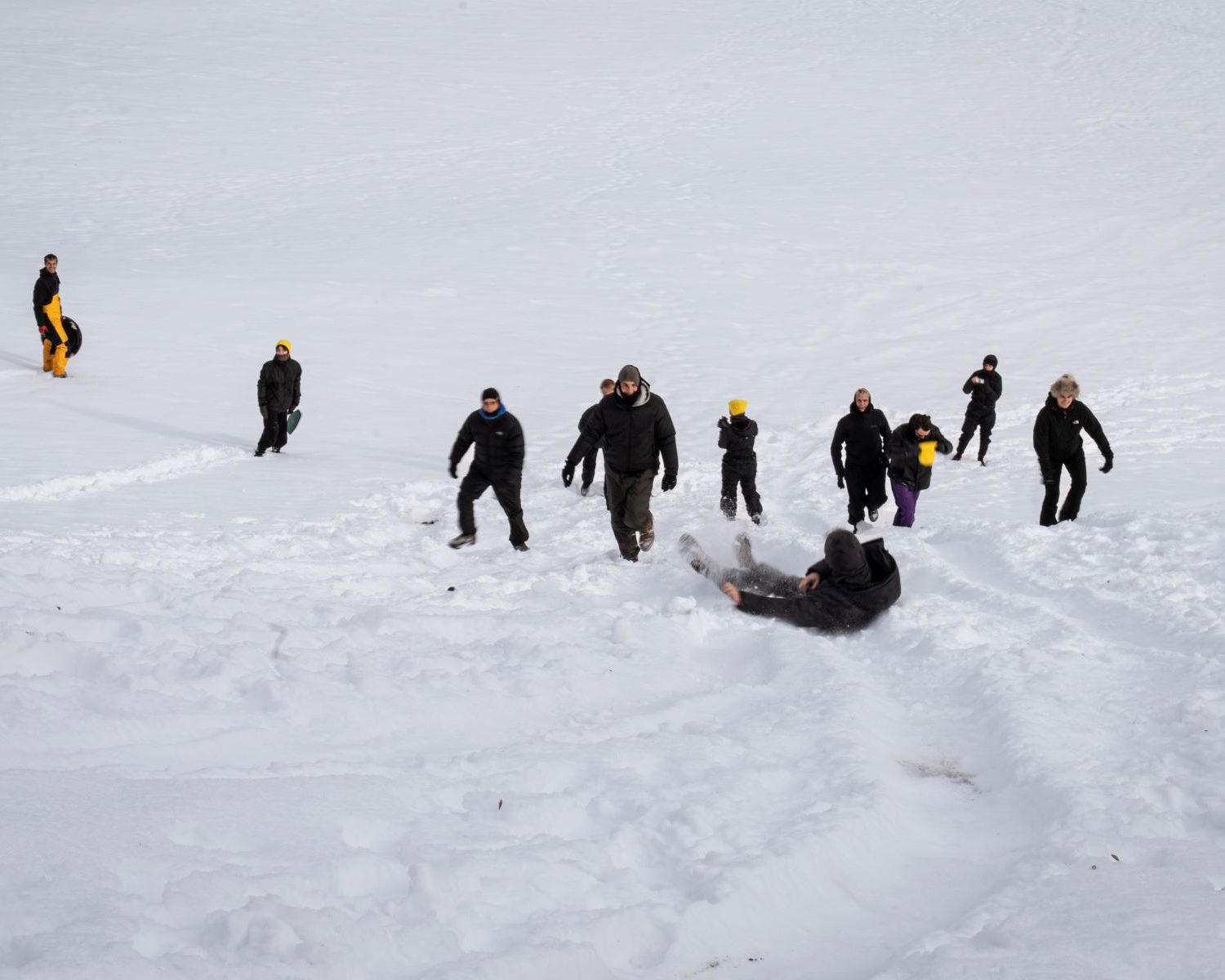
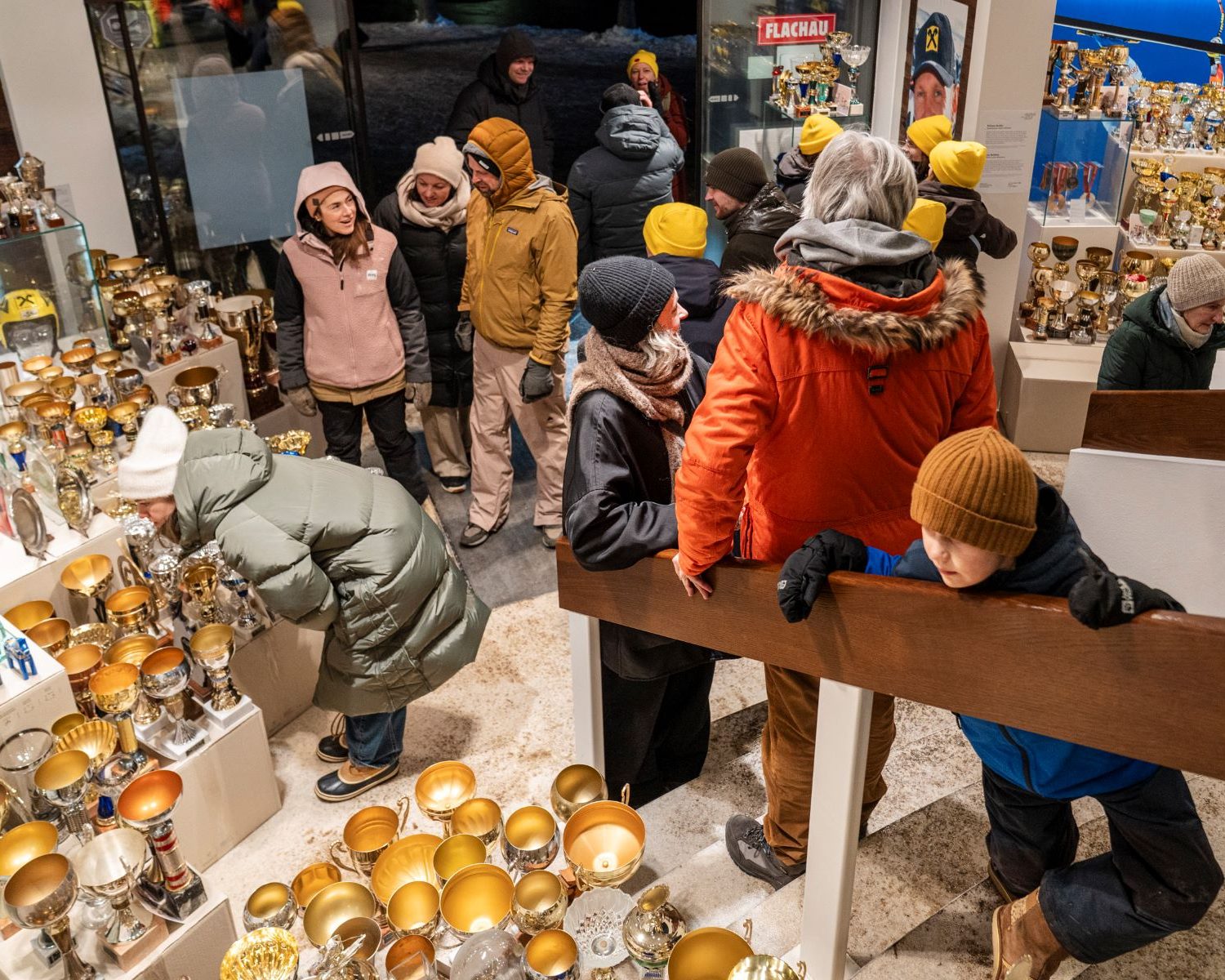
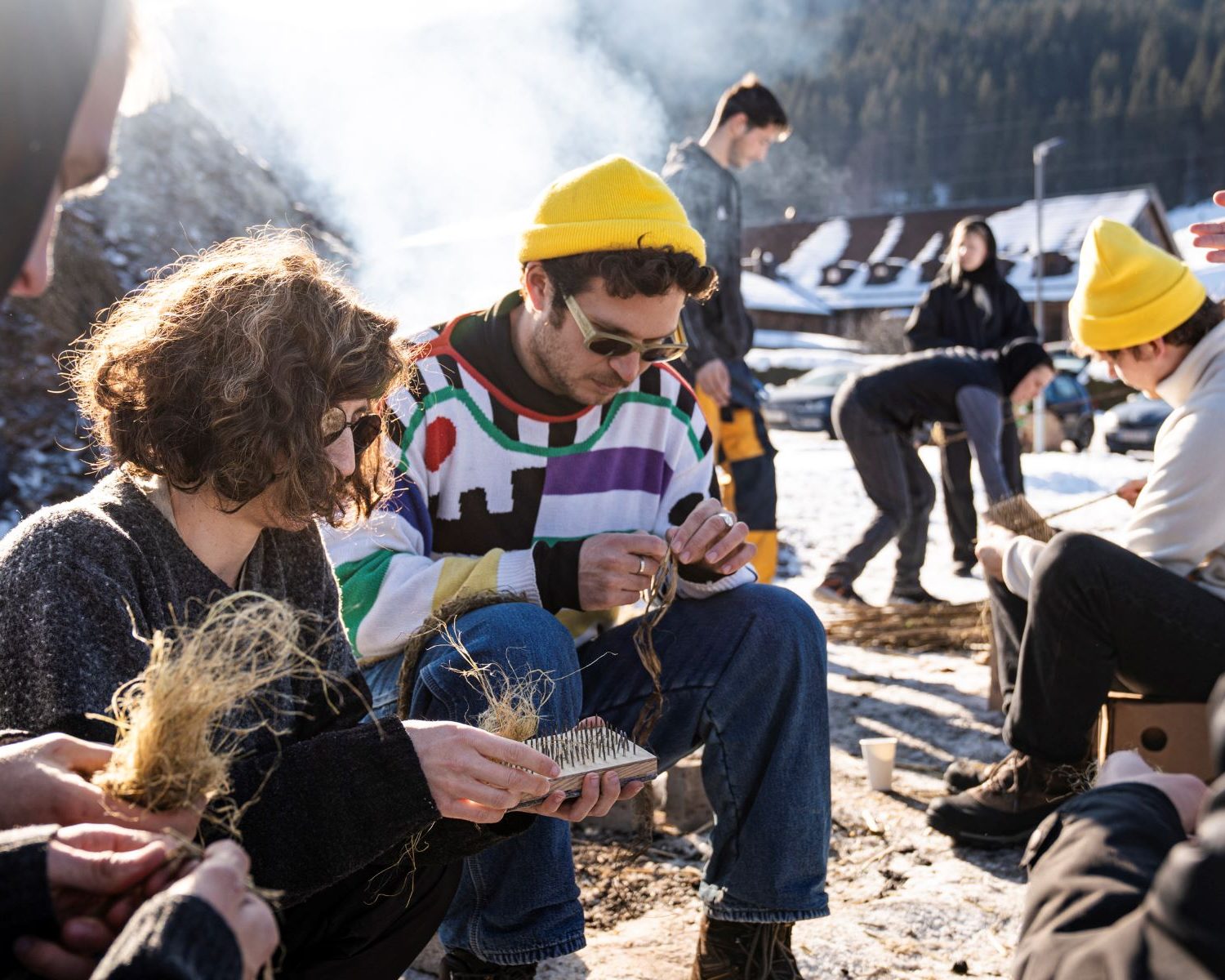
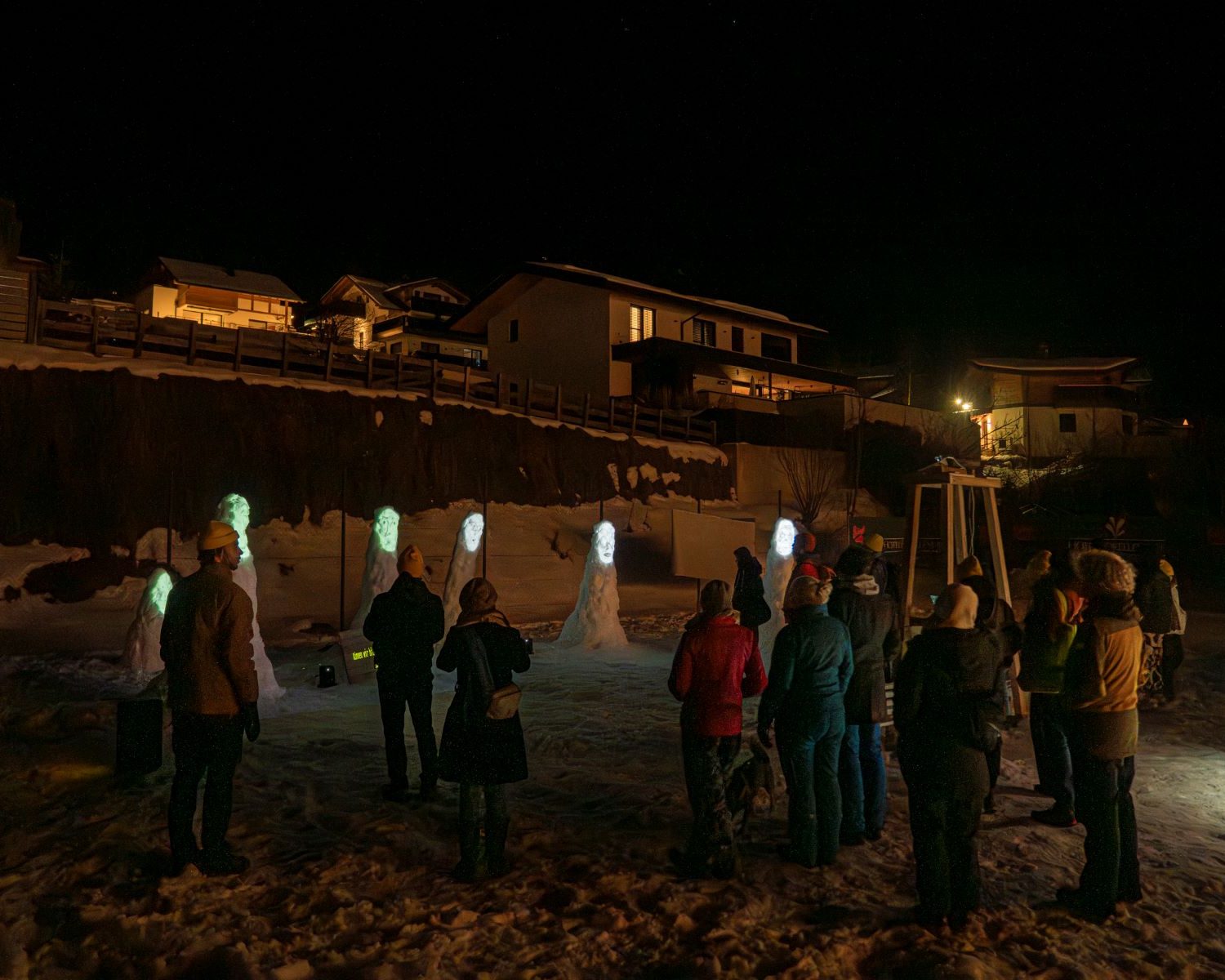
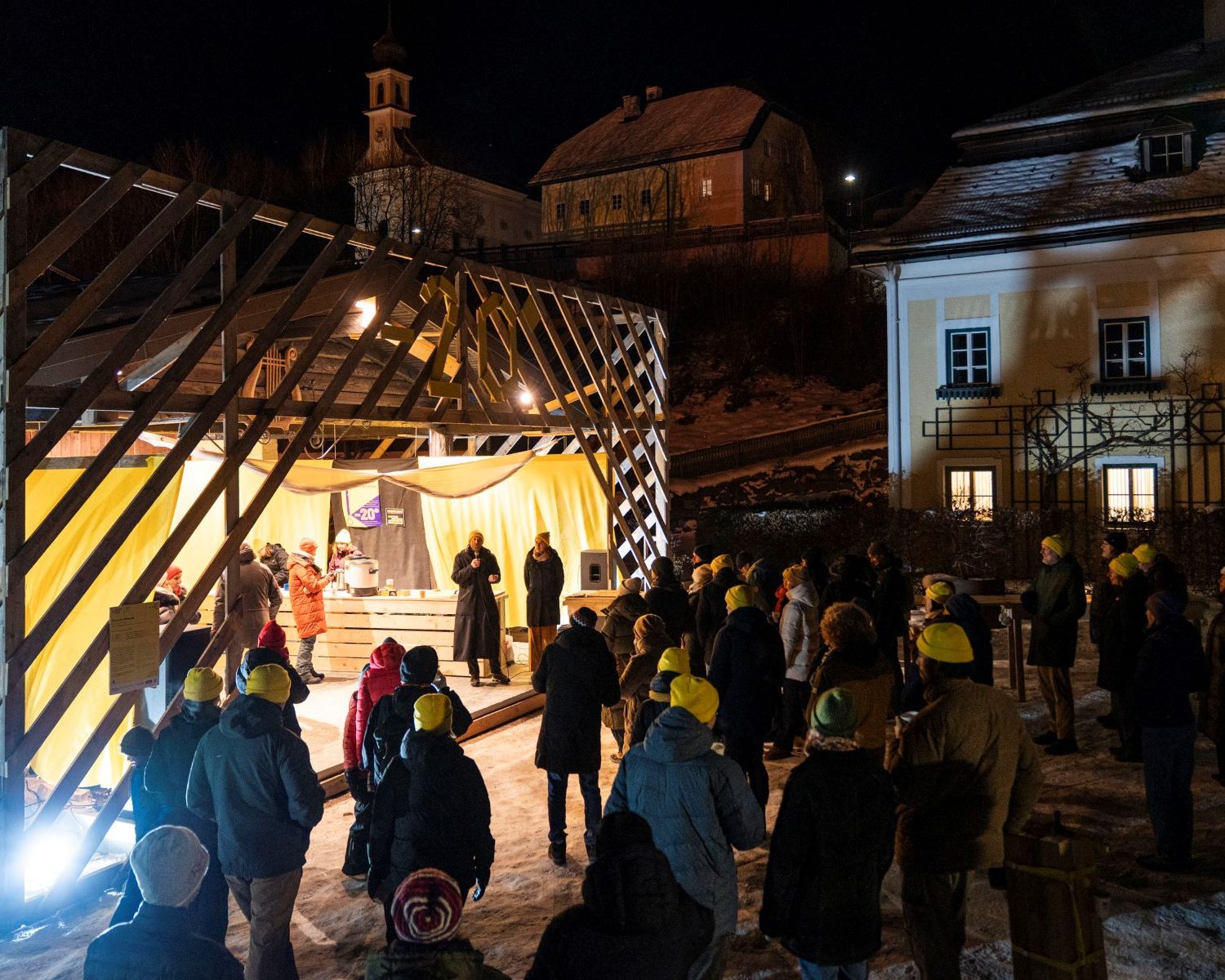
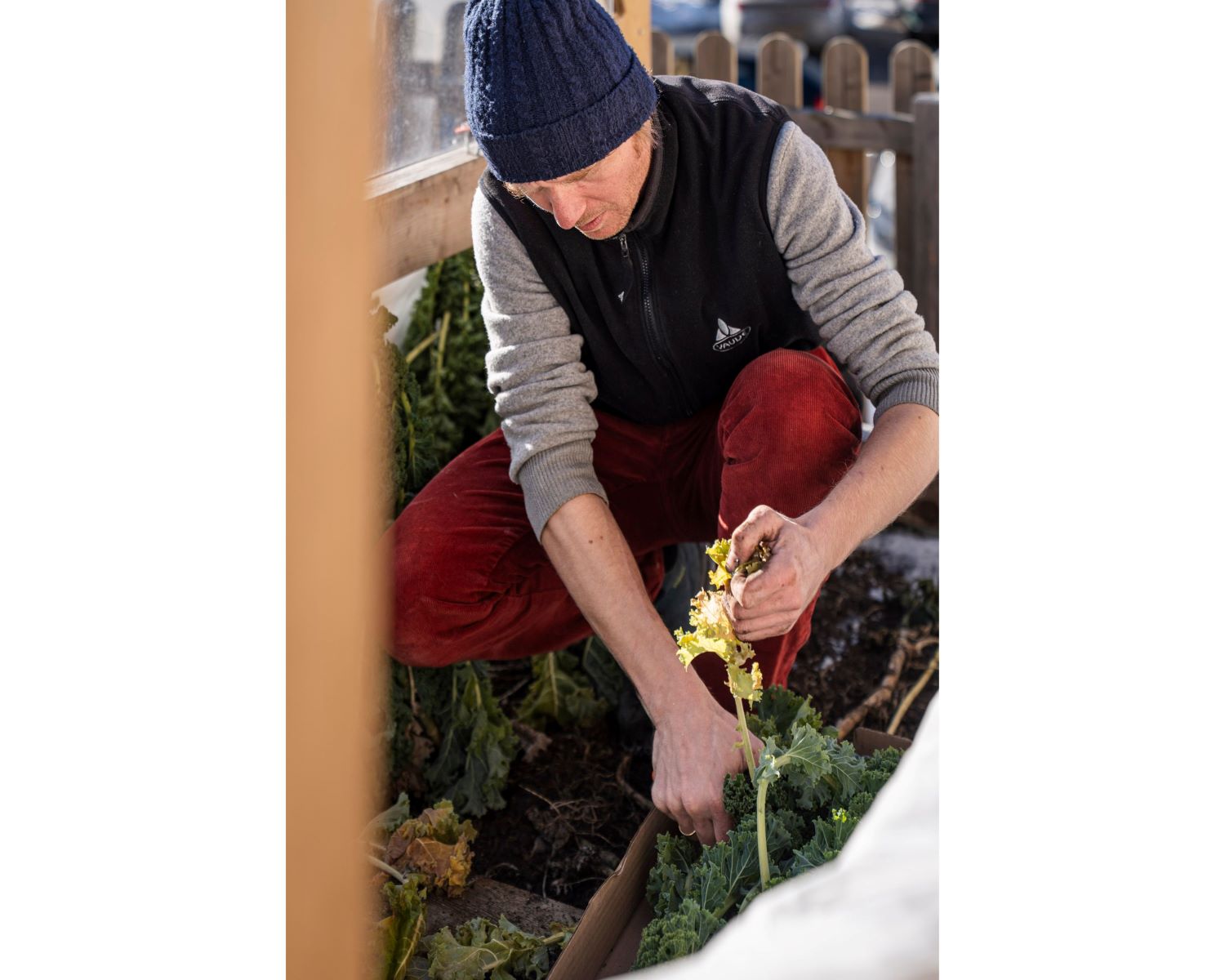
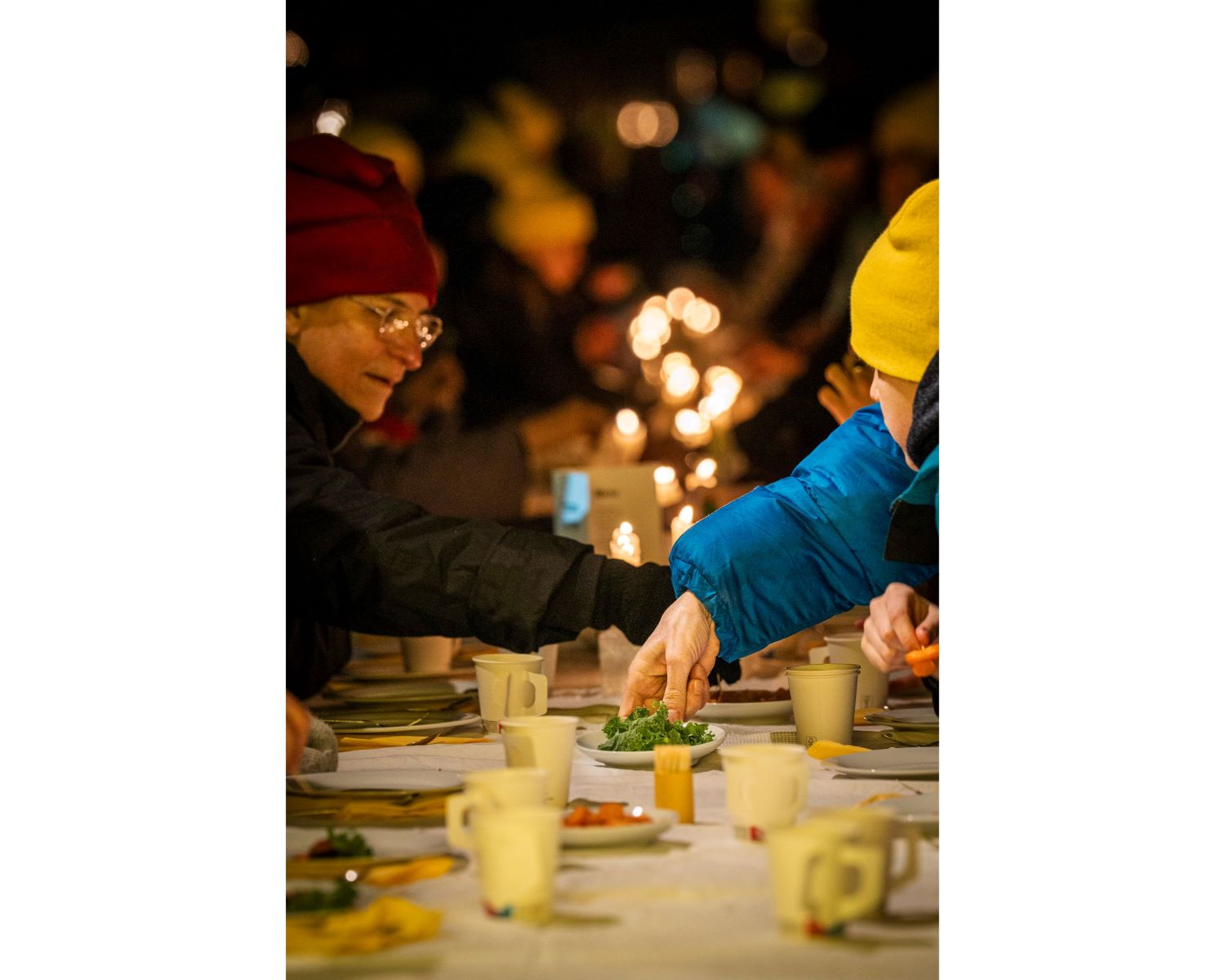
Trophies piled up in the Hermann Maier gallery, frozen kale snacks served as finger food, rainbow-coloured snow covering a hill in Reitdorf, two-meter-high snow(wo)men debating on a tennis court, people diligently brushing dried nettle, a drone hovering over people bodysurfing down a snowy slope – a non-exhaustive list of dynamic traces of the minus20degree public space art biennale. How do these nutritious bites, spectacular sites, the joy of being silly together, or the increased temperature in the Brechelbad sweat lodge contribute to human and beyond-human bonding throughout this landscape? This text does not aim to speak for or against m20d, but uses it as a springboard to think with.
Flachau, like many Alpine destinations, could easily be understood as misusing contemporary art to reach a new audience, adding an attraction-seeking cultural layer to ski-tourism business models. Despite this suspicion, minus20degree has been running since 2012 and only recently surpassed the circulating “why is it art?” question, echoed by many locals – as noted by Theo Deutinger, one of the lead organisers and a Flachau resident. “Flachau is a place where contemporary art in public space is neither expected nor needed,” said Marlene Deutinger, head co-organiser and daughter of Theo Deutinger.
From a local perspective, art has already been present in the church choir, the traditional brass band, or the artisan leathercraft shop. Still, m20d emphasises the coexistence of distinct worlds, sometimes with the re-confirmation of the binary “us” and “them” categories: ski tourism/après-ski versus contemporary art, with the festival positioned “between niche and mainstream” [1]. Yet many m20d visitors and contributors disapprove of this distinction because they not only make or attend art events but also ski during the time of the festival. Also, some attendees are non-skiers and visit m20d for the very first time. Therefore, m20d’s entanglement with the annual ski spectacle can be read as a form of “provocation anthropology” [2]: not staging unbridgeable oppositions, but giving rise to shared problems that require collective care [3]. For example, the 2022 backlash against a McDonald’s symbol on a construction fence (“soon near you” [4]), an experimental work by the Social Design students of the University of Applied Arts Vienna, revealed how easily art interventions can lead to collective concern and thus to action (in the form of calling the mayor or organising a town assembly) [5].
In the town of Flachau, people work hard to provide a temporary, illusory universe in which tourists can be anything: outdoorsy, loud, irresponsible, or rather slow and sleepy. A carnival, an anti-structure. But can these roles be swapped? Even if m20d runs parallel to showbiz Flachau, it renders labour visible. I remember passing Theo and Marlene on the ski bus, 15 hours after m20d26 closed, dismantling the Zentrum alone, log by log. A makeshift, heartwarming home for a few days was systematically undone. “Why are they alone with this hardship?” I wondered. Maybe it was a false, momentary glimpse, but it leads to a central question of tourism-art-hybrids: who can be present, and who is kept present elsewhere?
In resort economy, contemporary art becomes a class marker through time sovereignty. The biennale’s publicness is real for guests, partial for residents, and largely inaccessible for those whose labour produces “winter”. Non-attendance may signal a classed affordance: who has time, transport, warmth, cultural confidence – and whose winter is structured by shifts, fatigue, precarity. As Rimini Protokoll’s audioplay 4 Meter pro Sekunde notes, Flachau’s “Dutch Valley” is now run by Hungarians, which I, as a person with a Hungarian mother tongue, can easily confirm. This mention was important, but not a radical, change-maker act. If the bus or alpine taxi drivers, cleaning staff, and catering workers cannot attend, perhaps the event could move into their temporal reality. Shift-time could become a curatorial medium: ten-minute-long artistic works shown at shift-changes, repeatable loops across 24 hours, programs unfolding in staff routes.
Finally, fallowing: a sustainable farming practice that leaves the soil uncultivated, unseeded, or unplanted for one or more growing cycles to allow it to recover and restore its fertility. Flachau counts around 10.000+ tourist beds for roughly 2.500 residents. This ratio reveals how dominant winter tourism is – and how winter itself is increasingly manufactured when it cannot come by itself. In this context, it matters that minus20degree is a biennale. Its rhythm already resists the logic of constant activation; it appears, disappears, and leaves temporal gaps in which the town returns to other forms of use, labour, and exhaustion.
In that sense, m20d does practice a degree of fallowing. Not every winter needs an event; not every landscape needs to perform. A season without the festival is not an absence, but a practice, even if it sounds like a paradox. How to expand this practice further? Many m20d works and texts engage with snow loss and climate change, but climate-themed art inside a heavily snow-made ski environment risks appearing as a softening eco-aesthetic for an industry under pressure. Instead of continuously producing critical gestures on top of ongoing extraction, one might ask what it would mean to extend fallowing beyond the biennial cycle itself.
Fallowing allows soil to regenerate; it allows bodies to recover; it allows meanings to settle without being immediately instrumentalised. In a town calibrated to peak season, the most radical gesture might be restraint: to accept that there are winters in which nothing is added, and no symbolic layer is placed on top of snow machines and infrastructures. To let the land sleep – and to see what forms of relation might emerge when nothing is scheduled to happen.
This restraint or pause can be a theme to stand in the line of former ones [7], and it can take many shapes. Letting the most used sites rest from cultural productivity and move m20d to non-dedicated, untouched, even somewhat invisible semi-public spaces, for example, to the guesthouse kitchens, laundry corridors, ski rental repair rooms, or into the snow groomer. This is just one option, but it would surely make the class lens visible if the festival inhabited the backstage of tourism.
Footnotes
[1] See https://www.gat.news/nachrichten/zwischen-nische-und-mainstream
[2] Mette Bovin: ‘Provocation Anthropology: Bartering Performance in Africa’, TDR , Spring, 1988, Vol. 32, No. 1 (Spring, 1988), pp. 21-41. <https://www.jstor.org/stable/1145866>
[3] Together with curator Fanni Nánay (PLACCC Festival/IN SITU Platform), we launched a survey this year among former m20d artists, who noted that most of their interactions with locals were driven by a need for help, for example, borrowing electricity, shovelling snow, or requesting permission to use privately owned land.
[4] See https://www.m20d.eu/m20d22-/soon-near-you-adva-eshel-judorganisingith-haslwer-rita-andrade-silva-esteves-martins
[5] See https://www.sn.at/salzburg/chronik/intendant-amuesiert-kunstaktion-loest-in-flachau-proteste-aus-art-434536
[6] Fallowing is a sustainable farming practice that leaves the soil uncultivated, unseeded, or unplanted for one or more growing cycles to allow it to recover and restore its fertility.
[7] Melt, World of Wellness, Global Village, Remote, Plateau, Commons
Kinga Szemessy
Kinga Szemessy, PhD, is a transdisciplinary movement artist and community engagement researcher at the Society and Sustainability / Contemporary Art and Cultural Production focus area of W&K Arts & Knowledges inter-university organisation (Paris-Lodron University and Mozarteum University Salzburg). In 2024, her collective SVUNG Research Group was among the selected artists at m20d, and in 2026, she returned as curator and facilitator for the “Art as commons” theoretical programme of the biennial. Together with Fanni Nánay, she launched a survey and held a participatory field research walk to understand how encounters are shaped between m20d artists and locals, and how the biennial itself is collectively remembered. The motive behind continuing work on m20d and writing this essay was the realisation of their own enchantment by the cold and snowy landscape while writing the 2024 artistic proposal, but the on-site installation period then demanded a more urgent matter to address, namely class and labour.
Das könnte dich ebenfalls interessieren
Stock Eyes
Januar 10, 2026
Stadtflucht: Kunst rund um Salzburg Stadt
August 14, 2025